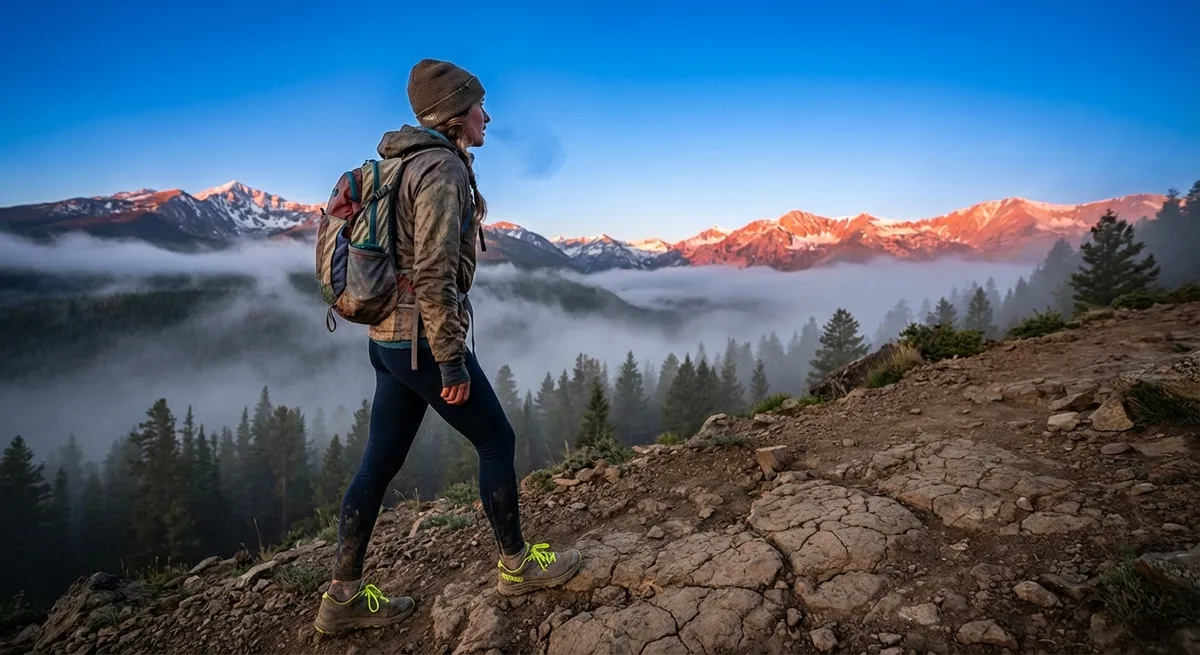
Why Active Travel Hits Different
Active travel doesn’t separate “vacation mode” from “training mode”—it fuses them. Instead of cramming in a treadmill session before a day of sitting, you’re stacking movement into the fabric of each experience.
When you hike the volcanic ridges of the Azores, you’re not just burning calories—you’re feeling raw Atlantic winds cut across your face as your legs power you up ancient lava flows. When you bike along the canals of Amsterdam, your cardio session becomes a rolling tour of centuries-old architecture and waterside cafés. In Tokyo, a sunrise run through Ueno Park or around the Imperial Palace shifts your jet lag into forward momentum as the city slowly lights up.
Active travel changes your relationship with effort. Hills become invitations. Stairs replace elevators. The long way back to your hostel turns into an urban trek. The payoff isn’t just fitness; it’s a deeper, more textured experience of every place you touch down in.
Tip 1: Build a “Move-First” Ritual in Every New City
Before you dive into museums, meals, or meetings, claim the first hour with your body. Movement becomes your orientation ritual—your way of mapping the terrain through sweat.
Land in Cape Town? Start with a coastal jog along the Sea Point Promenade, letting Table Mountain loom in your peripheral vision as you find your rhythm. Arrive in Mexico City? Walk or run through Bosque de Chapultepec at sunrise and watch the city wake up beneath towering trees. In Reykjavik, a brisk walk along the waterfront to the Sun Voyager sculpture doubles as both warm-up and postcard moment.
Your move-first ritual doesn’t have to be intense—it just has to be intentional. A 30–45 minute walk, jog, or mobility session:
- Resets stiff travel muscles
- Calms your nervous system after flights
- Tunes you into local sounds, smells, and skyline
By the time you sit down for your first coffee, you aren’t just “in” a new city—you’ve already traversed a slice of it on your own steam.
Tip 2: Let Terrain Dictate Your Training Style
Active travel becomes electric when you let the land write your workout. Instead of forcing your usual gym split onto every destination, treat each place as a different training lab.
In the Dolomites of Italy, long ascents and descents naturally push you toward hill repeats, lung-burning hikes, and heavy quad days disguised as panoramic strolls. In coastal towns like Nice or Split, the combination of beachfront promenades and nearby hills is perfect for intervals: flat tempo runs by the water, stair sprints up old stone lanes, then a cool-down along the harbor.
Urban terrain works too. In Lisbon or San Francisco, steep streets demand powerful glutes and ankles as you climb toward viewpoints. In flat cycling meccas like Copenhagen or Girona, you can log serious low-impact cardio just commuting by bike between neighborhoods and cafés.
Ask yourself, wherever you land:
- Where are the natural inclines? (Hills, dunes, steps)
- Where is the longest uninterrupted stretch? (Promenades, riverside paths)
- Where can I combine views with effort? (Lookouts, city parks, coastal roads)
When terrain sets the program, every destination becomes a custom-built training plan.
Tip 3: Turn Sightseeing into Endurance Play
Every major destination has a “tourist circuit”—iconic spots everyone tries to see in a day. Instead of hopping in taxis or on buses, stitch these highlights together into one continuous endurance session.
In Paris, map a route that links the Eiffel Tower, Seine riverbanks, Louvre, and Jardin du Luxembourg as a long urban run or power-walk. Stop to admire, breathe, and snap your photos, then keep rolling. In Kyoto, create a temple-to-temple cycling circuit: Fushimi Inari’s gates at dawn, then pedal through quiet streets to Kiyomizu-dera, and finish with a mellow ride along the Kamo River.
In New York, you could:
- Start near Brooklyn Bridge at sunrise
- Run or walk across into Manhattan
- Cut through the Lower East Side and up the Hudson River Greenway
- Finish with laps around Central Park, using hills as your final push
Your watch might call it a long run; your camera roll will call it an epic city tour. Endurance play is how you stack memories and miles at the same time—and it makes every step feel like part of the story, not just “exercise.”
Tip 4: Pack a Minimalist Travel Training Kit
You don’t need a full gym to stay sharp on the road; you need versatile tools and a willingness to improvise. A minimalist kit turns any hostel courtyard, rooftop, or patch of grass into your training zone.
Consider packing:
- A light resistance band for rows, pull-aparts, and glute activation
- A mini-loop band for hips, squats, and warm-ups before hikes
- A jump rope for quick, high-intensity sessions in tight spaces
- A compact lacrosse or massage ball to release tight calves, hips, and back after long days
Use park benches for step-ups and triceps dips. Use stairs in old towns—from Porto to Valparaíso—as natural stair climbers. Use playgrounds as functional gyms for hangs, rows, and core work.
Destinations like Medellín, Barcelona, or Sydney often have outdoor workout stations right along popular running routes. Tee up a 20–30 minute strength session mid-run: a circuit of push-ups, band rows, split squats, and planks before you cruise home. The gear is light, but the impact on your consistency is huge.
Tip 5: Recover Like a Local Explorer, Not a Tourist
Adventure is only sustainable if you respect recovery. Active travel can pile on more steps, more hills, and more intensity than your regular weeks—so your downtime has to be just as deliberate.
In hot destinations like Bali or Chiang Mai, use hotel pools or nearby beaches for low-impact recovery swims or gentle water walking. In alpine hubs like Chamonix or Innsbruck, schedule an easy day with slow strolls through town, light stretching in a park, and maybe a soak in a local spa or thermal bath if available.
Refuel with local whole foods:
- Mediterranean coasts: fresh fish, olives, vegetables, whole grains
- Southeast Asia: rice, vegetables, lean proteins, tropical fruits
- Central Europe: hearty grains, soups, stews, and seasonal produce
Hydrate aggressively—especially at altitude in places like La Paz or Cusco, or in dry heat like Arizona or Morocco. Then defend your sleep: eye mask, earplugs, and a loose wind-down routine (light stretching, journaling, reading) even if your schedule keeps shifting.
Remember: you’re not just chasing the most intense session; you’re building a body and mindset that can chase sunrise after sunrise, summit after summit, without burning out.
Conclusion
Active travel is more than a way to stay “on track” while you roam—it’s a chance to redefine what training feels like. Every city street becomes a warm-up, every hill a challenge, every coastline a moving meditation. When you land somewhere new and choose to move first, let the terrain guide you, and fold discovery into your endurance, you’re no longer just passing through destinations—you’re inhabiting them.
Pack light, move often, and let the world stretch your limits. The next stamp in your passport can also be the next chapter in your strongest story.
Sources
- Centers for Disease Control and Prevention – Physical Activity Basics - Overview of recommended activity levels and health benefits of regular movement
- World Health Organization – Physical Activity - Global guidelines and data on physical activity and its impact on health
- Harvard T.H. Chan School of Public Health – Benefits of Physical Activity - Evidence-based summary of how movement supports long-term health and performance
- U.S. Department of Transportation – Active Transportation Resources - Information on walking and cycling as integrated modes of travel
- National Park Service – Plan Your Visit - Practical guidance for safely planning active outdoor experiences in U.S. national parks