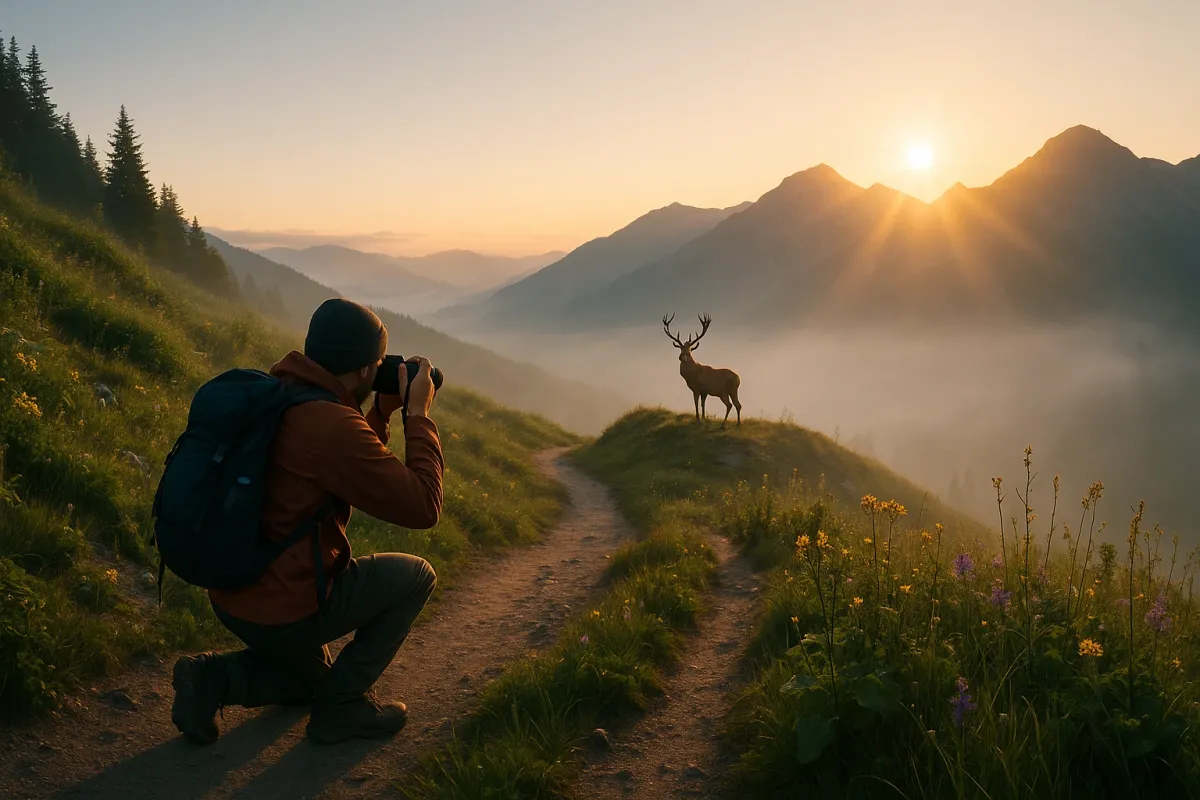
Those award-winning shots aren’t just pretty wallpapers. They’re coordinates—real places you can hike, trail run, paddle, and climb through. On Fit Voyaga, we see them as invitations: train where the pros shoot. Move your body in the same spaces where world-class photographers wait for the perfect light.
Below are some of the types of destinations showcased in contests like Nature Photographer of the Year 2020—Arctic vistas, European forests, African savannas, and wild coastlines—and how to turn them into your next fitness playground. Along the way, you’ll get 5 powerful active travel tips to help you chase both peak performance and peak views.
Glacier Edges & Arctic Light: Endurance in the Far North
Award-winning nature photos often come from the edges of the map: Icelandic glacier lagoons, Norwegian fjords, Arctic coastlines where the sky stays pink long after sunset. Those photographers reached their vantage points by hiking across volcanic trails, scrambling on rocky bluffs, and sometimes skinning up snow-covered ridges. You can follow their footsteps—with training instead of tripods.
Base yourself near hubs like Reykjavík (Iceland), Tromsø (Norway), or Lofoten Islands and build your days around long, slow endurance sessions: coastal trail runs, glacier-view hikes, and stair-sprinting up harbor viewpoints. Cold air tax your lungs, rolling terrain teaches your legs resilience, and the reward is the same light that wins global photo competitions. Bring microspikes or trail shoes with serious grip—those black-sand trails and icy paths can flip from “Instagram dream” to “ankle nightmare” in a step.
Active Travel Tip #1 – Train Like the Light Matters
Photographers build their days around golden hour; you can too. Plan your hardest effort (hill sprints, tempo run, or fast hike) to land at sunrise or sunset, when temps are cooler and the sky is on fire. It pushes you to start early, move with purpose, and finish with an unforgettable view. Set your alarm for civil twilight, prep your gear the night before, and treat the sunrise like your race start line.
Deep European Forests: Strength & Mindfulness Under the Canopy
The Nature Photographer of the Year galleries are full of enchanted European scenes—ancient beech forests in Germany’s Eifel region, mossy woodlands in Poland, and fog-wrapped pines across Scandinavia. These aren’t just postcard-perfect; they’re ideal natural gyms for strength, agility, and mental reset.
On soft forest floors, you can practice trail intervals, bodyweight strength circuits on logs, and balance drills on roots and rocks. Pick a marked loop in a national park or nature reserve; do it once as a warm-up walk, then again as a “station-based” strength session: push-ups at a fallen tree, lunges along a straight stretch, step-ups on a low stump, and a minute of mindfulness whenever the light shafts through the branches just right. Forest air is shown in research to lower stress hormones and heart rate—think of it as recovery for your nervous system while your muscles work.
Active Travel Tip #2 – Pack a “Micro-Gym” in Your Daypack
Turn any trail into a strength studio with a minimalist kit: a light resistance band, a compact jump rope, and your own bodyweight. That’s it. Pre-plan a simple circuit you can repeat anywhere:
- 15 squats
- 10 push-ups
- 15 band rows (looped around a tree)
- 30 seconds of high knees with the jump rope
Repeat 3–4 times mid-hike. No need to find a gym in a new city—the forest is your gym.
Big Sky, Big Strides: Moving Through Wildlife Country
Those jaw-dropping wildlife shots—lions crossing the savanna, wildebeest kicking up dust, bison in golden grass—come from places like Kenya’s Maasai Mara, Tanzania’s Serengeti, and U.S. national parks such as Yellowstone. While you can’t exactly sprint next to a lion (and absolutely shouldn’t), you can build active days around these ecosystems with guided experiences.
Think sunrise walking safaris with local guides, bike safaris in designated safe areas, and long, low-intensity hikes along park-approved trails. Every step becomes more intentional when you’re sharing space with wildlife—photographers wait quietly for hours, and you can mimic that patience with slow, steady movement that prioritizes awareness over pace. It’s a wildly different kind of workout: cardio mixed with vigilance, training your senses as much as your muscles.
Active Travel Tip #3 – Move With Local Guides, Not Against the Landscape
In wildlife-heavy areas, never improvise your own “fitness route.” Instead:
- Book local, certified guides who know animal behavior and park rules.
- Ask for fitness-friendly versions of classic tours (longer walking routes, more hiking, or cycling options if available).
- Let their rhythm set your session: you’re there to fit into the ecosystem, not bulldoze through it.
You’ll burn calories, but you’ll also build respect, safety, and stories worth retelling.
Wild Coastlines & Storm-Ready Conditioning
Some of the most shared winning photos online show coastal drama—waves exploding against cliffs in Portugal, sea stacks rising out of the Oregon coast, lighthouses dwarfed by winter storms in the North Atlantic. Photographers here battle wind, spray, slippery rock, and sudden weather shifts. As an adventure athlete, that’s your cue for functional, real-world conditioning.
Pick coastal bases like Nazaré or Algarve cliffs (Portugal), Cornwall (UK), or Madeira’s levadas and ridges. Build wind-resistance sessions: power hikes or runs along cliff paths, sand sprints on beaches, and stair repeats between beach level and bluff tops. Wind adds natural resistance, sand taxes your stabilizers, and the ever-changing light keeps your mind fully engaged. Just like photo pros, you’ll constantly scan the sky, the waves, and your footing—full-body situational awareness training.
Active Travel Tip #4 – Respect the Elements, Upgrade Your Gear
Coastal and storm-prone regions reward those who pack smart. At minimum:
- Layering system (base, mid, wind/water-resistant shell)
- Trail shoes with real grip (no slick road sneakers on wet rock)
- A lightweight dry bag for phone/camera and an extra warm layer
Training in wild conditions builds toughness—but only if you can stay warm, dry enough, and safe. Think like a photographer: protect your “equipment,” and the experience stops being miserable and becomes exhilarating.
Mountains, Milky Way, and High-Altitude Fitness
Night-sky photos—Milky Way over jagged peaks, meteor showers above alpine lakes—often come from high places: the Dolomites, Patagonia, the Rockies, or the Himalayan foothills. To get clear, dark skies, photographers hike in early, carry weight, and often stay out late into the cold. That’s practically a blueprint for high-altitude endurance and strength training.
Choose mountain towns like El Chaltén (Argentina), Chamonix (France), Banff (Canada), or Leh (India) as your base. Start with gradual acclimatization: easier hikes for the first day or two, then progress toward longer distances or steeper trails. Treat each night-sky outing (even if you’re just there for the stars, not photos) as a loaded hike: carry water, layers, and some weight. Your lungs work harder at altitude; your legs earn every meter of gain. Recovery is non-negotiable—early nights, real food, and lots of hydration.
Active Travel Tip #5 – Periodize Your Trip Like a Training Block
Instead of cramming “all the epic stuff” into 48 hours, treat your journey like a mini training camp:
- Day 1–2: Easy walks, short runs, gentle mobility.
- Day 3–4: Moderate hikes or runs, light strength sessions.
- Day 5–7: One or two big efforts (summit attempt, long trail day), surrounded by lighter days.
This mirrors how athletes peak for events. You’ll perform better, enjoy more, and avoid the classic “burn out by day three” trap many adventure travelers hit.
Conclusion
Nature photography contests like Nature Photographer of the Year 2020 don’t just crown the best images—they secretly publish a bucket list of real-world training grounds. Every viral shot of a glacier, forest, savanna, stormy coast, or star-splashed peak is proof that someone stood there, waited, watched, and endured. You can do the same—with your heart rate up and your body in motion.
Let the next gallery you scroll be your fitness map: pick a landscape that stirs something in you, then design your trip around moving through it—running, hiking, paddling, climbing, or all of the above. Train like the light matters. Pack your micro-gym. Trust local guides. Respect the elements. Periodize your adventure.
And when you finally reach that ridge or shoreline you’ve only ever seen in award-winning frames, you’ll realize something profound: you didn’t just travel to a destination—you earned it, one powerful, intentional step at a time.