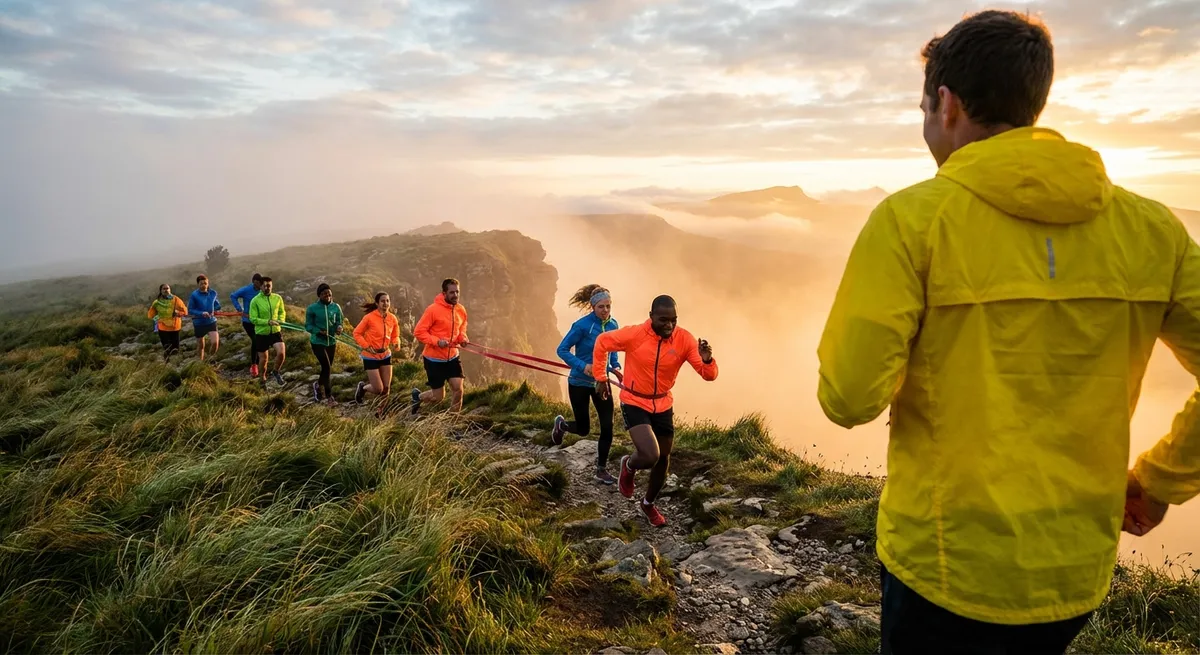
Why the World Is the Best Workout Partner
Forget the treadmill glow; nothing beats the raw energy of wind, sun, and shifting terrain. Training outdoors forces your body to adapt in real time—uneven ground fires up stabilizer muscles, rolling hills challenge your heart, and changing temperatures sharpen your mental grit. You don’t just get fitter; you get more capable.
Beyond the physical, nature delivers powerful psychological benefits. Studies link green spaces with reduced stress, improved mood, and better focus. Swap fluorescent lights for skylines or tree canopies, and your workout becomes a reset button for your nervous system. You move differently knowing the horizon isn’t a wall but a possibility.
This is where outdoor workouts become active travel fuel. Every park becomes a training basecamp, every waterfront a running track, every stairway a strength circuit. You’re no longer “fitting in” workouts on the road—you’re choosing destinations because of how they’ll challenge and change you.
Destination Highlights: Where Adventure Meets Training
Let the map guide your muscles. These destination styles show how world landscapes can shape your workout—and your story.
Coastal Cities – Speed and Endurance
Think Barcelona’s beachfront promenades, Rio’s Copacabana, or Cape Town’s Sea Point. Long, flat stretches next to the ocean are perfect for tempo runs, sunrise interval sessions, and bodyweight circuits on the sand. The resistance of soft sand intensifies sprints and plyometrics, sculpting legs and lungs at the same time.
Mountain Towns – Power and Resilience
In places like Chamonix, Banff, or Queenstown, elevation and terrain become your toughest coach. Hiking steep trails doubles as a low‑impact leg day; fast-packing and trail running trigger explosive strength and cardiovascular gains. Even walking uphill with a loaded daypack turns a simple stroll into a functional strength workout.
Historic Cities – Functional Fitness on the Move
Rome’s staircases, Lisbon’s hills, and Istanbul’s cobblestones are natural obstacle courses. Power walk or jog between landmarks, use benches for step‑ups and tricep dips, and sprint short, steep streets. You’ll return with photos and a heart rate history that tells the story of your journey in sweat and stone.
Desert & Arid Landscapes – Mental Grit and Heat Adaptation
Destinations like Joshua Tree, the Canary Islands, or Wadi Rum demand respect. Early‑morning or sunset hikes, low‑intensity runs, and mobility flows on warm rock surfaces build mental toughness and temperature resilience. With proper hydration and sun protection, these environments teach you how to perform when the elements push back.
Wherever you go, let the landscape dictate the workout. Chase summits, shorelines, skylines—then let your training style flex to match the terrain.
Outdoor Training Essentials: Safety, Performance, Freedom
To turn any destination into a training ground, you need a minimalist toolkit and a smart mindset. Outdoor workouts give you infinite freedom, but preparation keeps them exhilarating instead of risky.
Dress in breathable, moisture‑wicking layers so you can adapt to shifting weather and intensity. Prioritize shoes that match your environment: trail shoes with grip for rugged routes, light road shoes for city miles, and sandals or water‑friendly footwear for coastal explorations. A compact pack with water, electrolytes, a light snack, and a basic first‑aid setup turns a short workout into a safe micro‑expedition.
Environment changes can dramatically affect performance. Heat, altitude, and humidity all increase perceived effort and cardiovascular strain, so scale your intensity instead of chasing home‑based numbers. Focus on time, feel, and form rather than pace or weight. Outdoor training isn’t about perfection—it’s about adaptation, awareness, and stacking small challenges that make you stronger everywhere.
5 Active Travel Tips for Fitness Adventurers
These five tips are built for travelers who want their passport stamps and personal records to rise together.
1. Build Your “Anywhere” Workout Framework
Instead of rigid routines, design a flexible workout template you can run anywhere:
- Movement prep (5–10 minutes): Dynamic stretches and joint circles
- Strength block (10–20 minutes): 3–5 bodyweight moves (squats, lunges, pushups, planks, hip hinges)
- Cardio block (10–20 minutes): Walk/jog intervals, hill sprints, stair repeats, or cycling
- Cool down (5–10 minutes): Gentle stretching and deep breathing
With this framework, a city park in Tokyo, a beach in Mexico, or a hostel courtyard in Croatia all become plug‑and‑play training zones. You don’t need equipment; you need intention and creativity.
2. Turn Transit Days into Movement Missions
Travel days don’t have to be “lost” days. Use them to refresh your body instead of wreck it.
- At airports or stations, walk laps instead of sitting at the gate.
- Between buses or trains, sneak in micro‑circuits: 10 squats, 10 calf raises, 10 slow wall pushups.
- After long flights, commit to a 20–30 minute walk or light jog at your arrival destination to reset your circadian rhythm and loosen tight muscles.
You’re not chasing intensity here; you’re keeping your body online so when adventure calls the next day, you’re ready.
3. Scout Routes Like a Local Athlete
Before you land, research your destination like you’re joining its underground training scene.
- Use map apps and satellite views to spot waterfront paths, green belts, river trails, and large parks.
- Check local running clubs or outdoor groups on social media for common routes and safe neighborhoods.
- Search for public stairways, pedestrian bridges, and outdoor fitness parks—they’re built‑in workout stations.
This doesn’t just keep you active; it gives you a more intimate, ground‑level view of the place you’re visiting. You’re not a spectator; you’re part of the city’s pulse.
4. Sync Your Training with the Environment
Let the climate and geography write your training plan.
- In humid or hot destinations, prioritize early morning sessions, steady‑state cardio, and more frequent hydration breaks.
- At higher elevations, start with shorter, easier efforts and extend your recovery. Let your lungs adapt before chasing speed.
- In windy coastal regions, run out against the wind and return with it at your back, or use the resistance for power walks and short, strong intervals.
Instead of fighting the elements, partner with them. Your fitness adapts faster when you work with the environment instead of forcing a gym‑style routine onto wild terrain.
5. Chase Experiences, Not Just Metrics
One of the greatest gifts of outdoor workouts is perspective. Your “PR” might not be a faster 5K—it might be the memory of finishing hill repeats in a rainstorm over Bergen, or flowing through yoga as the sun rises over Uluwatu’s cliffs.
Set experience‑based goals for each trip:
- Complete a sunrise hike to a local viewpoint.
- Run or power walk every bridge in a new city.
- Swim across a calm bay or lake (with a buddy and appropriate safety).
- Learn a local movement: beach volleyball, surf lessons, martial arts in the park, or a community fitness class outdoors.
Tie your training to stories you’ll tell for the rest of your life. The miles, reps, and climbs become chapters, not chores.
Conclusion
The world is not a backdrop to your fitness—it’s the ultimate training partner. From oceanfront promenades to jagged ridgelines, from stone staircases to quiet forest trails, every landscape offers a new way to test and transform yourself. Outdoor workouts fuse movement with meaning, turning ordinary trips into living, breathing expeditions of strength and discovery.
Pack curiosity alongside your running shoes. Let the map shape your muscles, let the weather sharpen your resolve, and let every horizon remind you: this body is built to roam, to climb, to sprint, to explore. Your next workout isn’t waiting in a gym—it’s waiting just beyond the door, wherever on earth you decide to go.
Sources
- Centers for Disease Control and Prevention – Physical Activity Basics - Overview of health benefits of regular physical activity and recommended guidelines
- Harvard T.H. Chan School of Public Health – Green Spaces and Health - Explores how time in nature improves mental and physical health
- American Council on Exercise – Benefits of Outdoor Exercise - Details performance and wellness advantages of training outside
- Altitudes.org – Exercise at Altitude - Explains how higher elevations affect exercise capacity and adaptation
- U.S. National Park Service – Hike Smart - Practical safety guidance for outdoor and trail‑based activities