When Cities Become Circuits: Urban Destinations That Move You
Some places are built for motion. Step into Barcelona, and you immediately feel it: runners sweeping past along the beachfront promenade, cyclists weaving around Gaudí’s masterpieces, stair sprints waiting for you at Montjuïc hill. Your “gym” becomes a rotating circuit of plazas, parks, and waterfront paths, with tapas as your recovery meal.
In Tokyo, your training day might start with a meditative jog around the Imperial Palace moat, where locals glide by in silent focus, and end with a late-night walk through Shibuya’s electric maze of streets. The city rewards curiosity and movement—suddenly your step count soars not because an app says so, but because every side street looks like a new level in an urban adventure game.
Head to New York City and you’re dropped into a live-action HIIT session. Central Park turns into your track and hill combo; the Hudson River Greenway invites sunrise rides; the city’s endless staircases—from subway exits to High Line access points—become your built-in lower body burn. Urban fitness destinations don’t just keep you active; they rewire how you see cities themselves: not as concrete jungles, but as sprawling obstacle courses waiting to be explored.
Where Mountains Sculpt Mindset: High-Altitude Training Grounds
If cities sharpen your edges, mountains carve your resilience. Places like Chamonix, France, and Queenstown, New Zealand, feel less like towns and more like launchpads for the bold. Here, your schedule revolves around weather windows and trail conditions, not class times.
A day in the Alps might look like a lung-testing hike across glacier-fed valleys, a trail run that alternates between pine forest shade and wide-open ridgelines, and a cool-down walk past cow-dotted meadows and ringing church bells. Altitude becomes your quiet coach, whispering: “Breathe deeper. Dig further.”
In Queenstown, it’s impossible to sit still. Your quads get torched on mountain bike descents, your core engages on stand-up paddleboards across glassy lakes, and your courage gets called out on via ferratas and cliffside hikes. These destinations don’t just build fitness; they build a new normal where pushing your limits feels like the most natural way to meet a place.
Coastlines That Train You Between Tides
If your pulse quickens at the sound of waves, coastal fitness destinations will feel like home. In Ericeira, Portugal, mornings start with powerful paddling sessions in the Atlantic, where your shoulders and back work overtime between sets, and your balance gets sharpened on every ride. When the wind picks up, you swap surfboards for long coastal hikes or beach runs on packed sand.
On Hawaii’s Big Island, black lava fields, rainforest trails, and rugged shorelines fuse into a single training ground. One day you’re swimming in tide pools and practicing breath control; the next, you’re powering through a hill climb on a bike route made famous by triathletes. The ocean becomes both playground and resistance tool—every current a reminder that nature doesn’t do “easy mode.”
In places like Costa Rica’s Nicoya Peninsula, the rhythm of the day is built around movement: sunrise yoga under palm trees, trail runs through howler-monkey-filled forests, and ocean swims as the sky melts into orange. Coastal destinations teach you to sync your training with tides, temperatures, and light. You don’t just work out there—you move in conversation with the elements.
5 Active Travel Tips for the Fitness-Obsessed Explorer
Tip 1: Build Your Trip Around a “Signature Effort”
Pick one anchor challenge per destination: a sunrise summit, a coastal half-marathon route, a multi-pitch climb, or a long-distance coastal ride. Plan your travel days, rest, and nutrition around this single effort. It gives your trip a clear training arc and a story you’ll be proud to tell later.
Tip 2: Pack a Micro-Gym, Not a Moving Truck
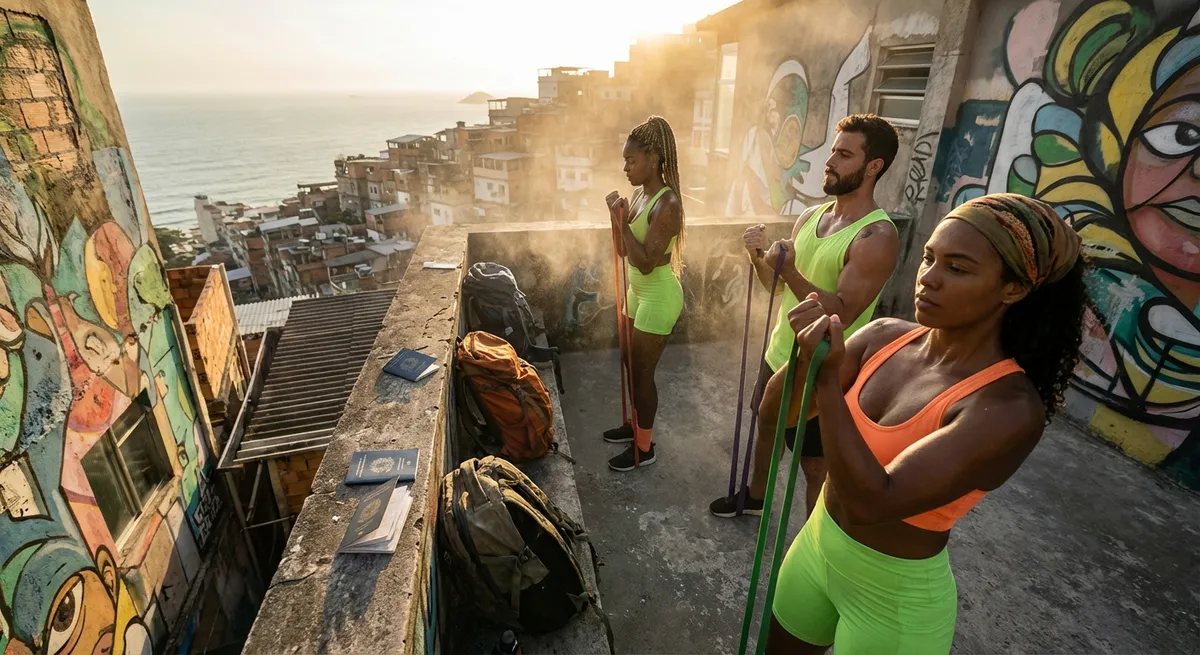
Bring gear that multiplies your options without eating up space: a lightweight jump rope, resistance bands, a compact suspension trainer, and a swim cap/goggles. With those four items, you can turn a hotel room, park, or beach into a full-body training zone, even when weather or logistics veto your original plans.
Tip 3: Train With Locals, Not Just Beside Them
Seek out local running clubs, outdoor bootcamps, climbing groups, or surf schools. Many cities have open meetups or drop-in workouts—search social media or community boards. Joining in not only levels up your training, it unlocks insider routes, safer solo options, and that electric feeling of sharing the grind with people who call the place home.
Tip 4: Periodize Your Itinerary, Not Just Your Workouts
Treat your trip like a training block: alternate high-intensity adventure days (big hikes, long rides, tough surf) with lower-intensity exploration (walking tours, gentle swims, yoga, museum days). This keeps you from flaming out halfway through and helps your body actually adapt instead of just survive.
Tip 5: Let Food Be Part Fuel, Part Exploration
Instead of chasing chain restaurants for “safe” macros, lean into local food as performance fuel. Think grilled fish and vegetables in Mediterranean hubs, hearty rice and lean proteins in Asia, or bean- and corn-based dishes in Latin America. Aim for one “performance plate” at each destination: a go-to local meal that leaves you energized, not wiped out, for whatever physical challenge comes next.
Crafting Your Own Fitness Destination Map
The world is not divided into “vacation spots” and “training grounds.” It’s one giant, interconnected arena for anyone willing to lace up, dive in, and say yes to a bit of discomfort. The hill above your guesthouse in Peru can be your interval track. The stone steps up to a hilltop temple in Thailand can be today’s leg day. The cold Baltic sea in Estonia can be your plunge pool after a hard run.
You don’t need to be an elite athlete to live this way; you just need to show up ready to move. Choose destinations that tug at your curiosity, then ask: How can I meet this place at my physical edge? That mindset turns every border crossing into an upgrade, every landscape into a training partner, and every trip into another chapter in the story of how you built the strongest, boldest version of yourself.
The map is wide open. Your next workout might be waiting on a cliffside path, in a neon-lit side street, or beyond the break of a foreign shore. Go find it.
Sources
- World Health Organization – Physical Activity Guidelines - Global recommendations and benefits of regular physical activity
- U.S. Centers for Disease Control and Prevention: Travel Health - Guidance on staying healthy and active while traveling internationally
- American College of Sports Medicine – Exercise and Altitude - Overview of how altitude affects training and performance
- Harvard T.H. Chan School of Public Health – Healthy Eating Plate - Evidence-based framework for building balanced, performance-supporting meals
- Global Running Day – Find a Running Group - Resource for discovering local running communities and group runs around the world