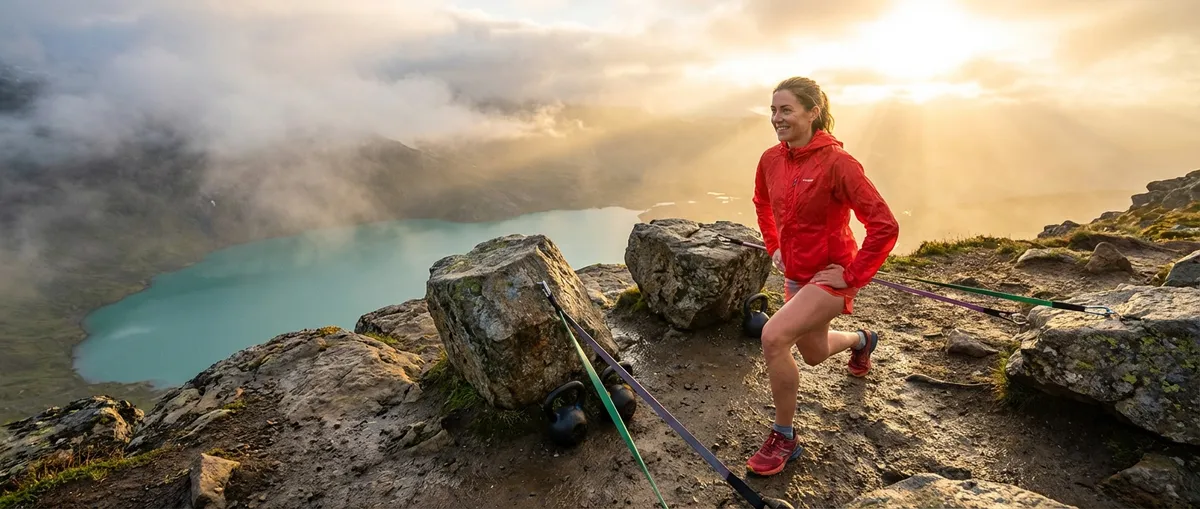
Why the World Is the Most Motivating Gym You’ll Ever Find
Outdoor workouts flip a mental switch that indoor training often can’t reach. Changing terrain challenges your muscles in fresh ways: sand pulls at your calves, altitude tests your lungs, and uneven paths fire up stabilizing muscles you didn’t know you had. At the same time, your mind gets a hit of novelty and presence—no screens, no stale air, just whatever the horizon’s serving that day.
Studies suggest that “green exercise”—movement in natural environments—can boost mood, lower perceived effort, and improve adherence to regular activity. That means you’re more likely to stick with your routine when it involves sunrise trails or cliffside paths instead of fluorescent-lit walls. Travel magnifies this effect: new surroundings demand your attention, pulling you into the moment and away from autopilot workouts. An interval session becomes a way to map a new city. A bodyweight circuit becomes an excuse to climb that hill with the lookout. You’re not just burning calories; you’re stitching experiences into your training log.
Destination Highlights: Nature-Built Training Arenas Around the Globe
Certain landscapes practically beg to be turned into full-body workout zones—no day pass required.
On coastal routes like the Bondi to Coogee walk in Sydney, you can weave sprints between viewpoints, drop into push-up sets on sea-side benches, and finish with stair climbs up from the sand. Rocky Mediterranean coastlines—from Croatia’s Dalmatian shores to Spain’s Costa Brava—offer natural “agility courses” over stone paths and coves, forcing you to balance, react, and move dynamically as the sea crashes beside you.
Mountain towns such as Chamonix in France, Queenstown in New Zealand, or Banff in Canada transform ordinary trail runs into altitude-boosted conditioning. Uphill hiking with a loaded daypack doubles as strength training for quads and glutes, while descents challenge your control and joint resilience. Urban explorers aren’t left out: riverfront paths in cities like London, Singapore, or Vancouver give you flat, scenic routes for tempo runs, with bridges and public parks offering pull-up bars, steps, and low walls for improvised circuits. Wherever you land, look for three things—elevation, open space, and repetition (stairs, steps, or loops)—and you’ve just found tomorrow’s workout venue.
5 Active Travel Tips for Fitness Adventurers
1. Design “Micro-Missions” Into Every Day
Instead of penciling in a single long workout, layer short “micro-missions” into your day: a brisk 15-minute stair climb to a vista in the morning, a 10-minute beach sprint session before a swim, and a sunset mobility flow in a park. These bite-sized efforts add up—especially when they piggyback on activities you planned anyway, like walking to a market at the top of a hill or reaching that castle on the ridge. Aim to connect each mission to a mini-goal: touch the highest point you can see, run to the last pier on the horizon, or beat yesterday’s time up the hostel’s nearest viewpoint.
2. Pack a “Pocket Gym” That Weighs Almost Nothing
You don’t need a trunk full of gear to stay strong on the road. A lightweight jump rope, a long resistance band, and a compact suspension trainer or fabric loop band can turn hotel courtyards, playgrounds, and shade trees into full training zones. On a terrace overlooking Morocco’s Atlas foothills, a resistance band adds load to squats and rows; on a balcony in Lima, a jump rope session lets you get breathless without hunting for a track. Prioritize gear that’s versatile, light, and quick to set up, so you’re more likely to actually use it between adventures, not just carry it.
3. Let Terrain Dictate Your Training Focus
Instead of forcing your usual gym split onto every destination, use the local landscape to steer your workout style. Coastal flatlands and promenades? Perfect for speed work, interval runs, and cycling. Steep alpine villages or hillside towns like Lisbon or Valparaíso? Lean into hill repeats, stair circuits, and loaded carries with your daypack. Forest trails or desert paths? Mix endurance hikes or runs with short strength stops—push-ups on logs, lunges on clearings, planks on viewpoints. This terrain-led approach keeps training fresh and aligned with what the environment does best, while also reducing injury risk by working with, not against, the surroundings.
4. Turn Sightseeing Into Endurance Training
Think of cities, old towns, and coastal paths as sprawling, living endurance courses. Swap bus tours for self-guided running or power-walking routes that connect monuments, viewpoints, and markets. In Rome or Athens, jog between ancient sites at an easy pace, pausing for bodyweight sets at plazas and parks. In Kyoto or Bogotá, choose routes that string together temples, plazas, and panoramas, letting the landscape dictate your intervals: fast between quiet stretches, easy in busier zones. You’ll log miles without obsessing over distance, and your memories of each landmark will be wrapped in the feeling of your own movement—breath, sweat, and all.
5. Build Recovery Rituals Into the Adventure
Outdoor training plus travel is a high-stoke combination—but also a high load on your body. Make recovery an intentional part of the journey rather than an afterthought. Seek out natural “recovery stations”: cold dips in alpine lakes after trail days, ocean wading to flush your legs after beach sprints, or relaxed cycling along canals on what would otherwise be a complete rest day. Bring a packable travel mat or towel for nightly 10-minute mobility sessions, and use downtime at bus stations, airports, or train platforms for calf raises, gentle hip openers, and ankle circles. Treat sleep like gear you can’t afford to lose; early nights before summit days or big exploration sessions will keep your energy adventurous, not depleted.
Building Your Own Outdoor Workout Blueprint
Every destination offers a different training canvas, but you can create a simple framework that follows you everywhere. Start with a daily “anchor” session—20–40 minutes of focused outdoor movement that fits the location: a jog along the waterfront, stairs to a hilltop, or a circuit in a public park. Layer in spontaneous movement opportunities throughout the day—taking the long way on foot, opting for bikes over ride-shares, slipping in a set of squats and push-ups when you spot a park bench with a view.
Keep your plans flexible so you can respond to weather, local tips, and energy levels. Some days will skew toward endurance—long trails, big hikes, or multi-hour bike rides. Others will be perfect for short, sharp strength or speed sessions between cultural stops. Over time, you’ll find your rhythm: a personal mix of exploration, structured training, and serendipitous sweat sessions that leaves you fitter when you return home than when you left, with your camera roll and your VO₂ max rising together.
Conclusion
Outdoor workouts turn every journey into a story you feel in your lungs and legs, not just one you scroll through later. When you move through a place—climbing its stairs, tracing its coastlines, running toward its skyline—you stop being a passive observer and start being a living part of the scenery. With a bit of intention, a touch of lightweight gear, and a willingness to chase effort wherever the horizon leads, your training can become the most memorable part of your travels. The world is wide, the trails are waiting, and your strongest self is always a few steps beyond your comfort zone—out there, where the view steals your breath just as your workout does.
Sources
- Centers for Disease Control and Prevention – Physical Activity Basics - Overview of recommended physical activity levels and health benefits
- Harvard T.H. Chan School of Public Health – Physical Activity and Health - Evidence-based insights on how movement impacts long-term health
- Environmental Science & Technology – “The mental health benefits of outdoor green exercise” - Research discussing psychological benefits of exercise in natural environments
- American College of Sports Medicine – Exercise Outdoors Tips - Practical guidance on safe and effective outdoor training
- National Park Service – Hiking Basics - Safety and preparation tips for hiking and trail-based workouts