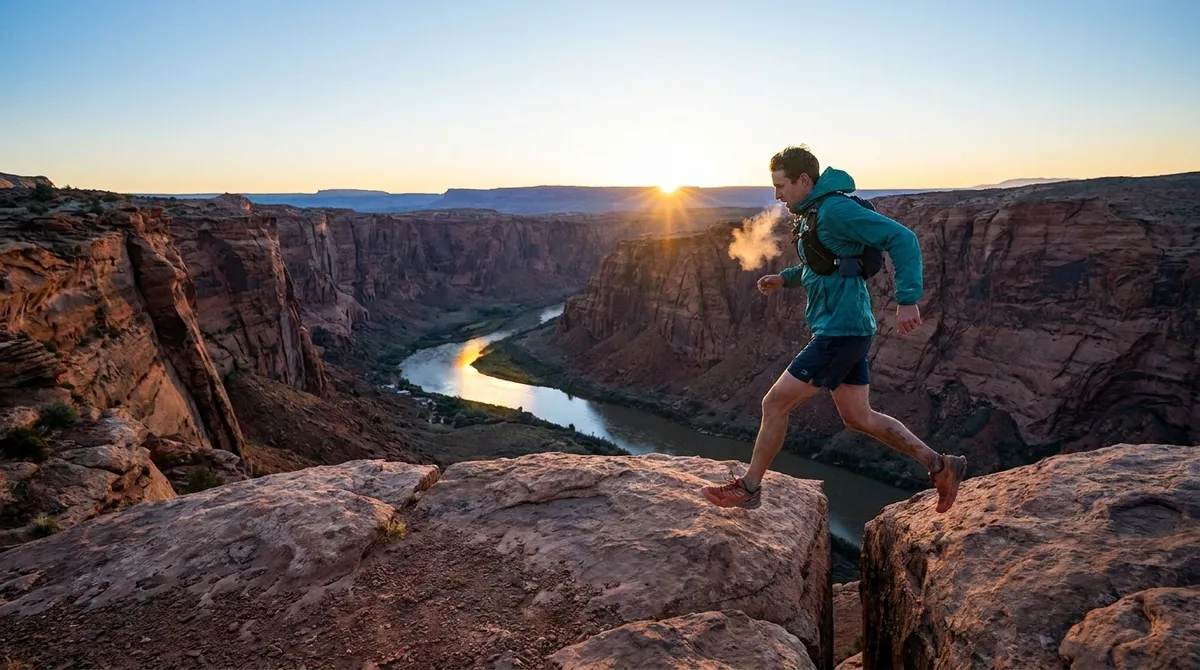
This is your call to turn the world into your training ground, not by counting reps, but by counting sunrises in new places, steps up volcanoes, and breaths taken above cloud lines. Welcome to adventure fitness the Fit Voyaga way: a wild fusion of movement, exploration, and awe.
Adventure Fitness: Where Wanderlust Meets Endorphins
Adventure fitness is more than signing up for a race abroad or dropping into a local gym on vacation. It’s a philosophy: move through the world in ways that challenge your body, sharpen your mind, and immerse you in the culture and landscape.
Instead of “How do I stay on track while traveling?” the real question becomes, “How can this destination push my limits and expand my comfort zone?” That might mean trail running above alpine lakes in Switzerland, sunrise stair sprints up Rio’s mosaic steps, sand-dune hikes in Morocco, or coastal paddle sessions in New Zealand.
Adventure fitness thrives on three elements: terrain, culture, and intention. Terrain offers resistance and variety, culture fuels curiosity and joy, and intention keeps it from becoming random movement. When you weave all three into your travel plans, your training stops feeling like a routine and becomes a story worth telling.
Destination Highlights: Where the World Trains You Back
Adventure fitness isn’t about ticking off the “fittest” cities; it’s about tuning into the unique resistance each landscape gives you. Here are a few iconic backdrops where the terrain practically invites you to move.
Patagonia, Chile & Argentina – The Cathedral of Wind and Stone
Glacier-fed lakes, knife-edged ridges, and valleys that feel like the edge of the world. Long trekking days in Torres del Paine or El Chaltén build serious leg endurance and mental grit. The winds are infamous—think of them as nature’s built-in resistance training.
Kyoto & the Kumano Kodo, Japan – Sacred Steps and Forested Trails
From temple stairs in Kyoto to the ancient pilgrimage routes of the Kumano Kodo, Japan blends spirituality with sweat. The climbs are steady and humbling, forcing you to find a rhythm in your breath and steps as you pass shrines and moss-covered stones that have seen travelers for centuries.
Madeira, Portugal – Island of Vertical Dreams
Known for its levada trails and dramatic cliffs, Madeira is a paradise for trail runners and hikers who crave elevation gain. Coastal paths, cloud forests, and ridge lines make your quads burn and your camera roll explode.
Queenstown, New Zealand – The Adrenaline Capital With a Big Backyard
Yes, there’s bungee jumping and jet boating, but the real adventure fitness happens on foot and on wheels: mountain biking singletrack, hiking Ben Lomond, or kayaking mirror-still lakes at sunrise. It’s a choose-your-own-endurance-quest kind of place.
The Atlas Mountains, Morocco – Grit in High Places
From rugged mule tracks to terraced villages, the High Atlas invites slow, steady climbing and long days on your feet. Thin air, rocky paths, and sweeping views train your lungs, ankles, and resilience all at once.
Every destination has its own “training personality.” Instead of asking, “Is this a good place to work out?” ask, “What kind of athlete will this place help me become?”
Five Active Travel Tips for Fitness Adventurers
These five tips will help you design trips that keep your heart rate—and your sense of wonder—sky-high.
1. Plan Your Trip Around Movement, Not Just Landmarks
Instead of building an itinerary of “things to see,” design one around “ways to move.”
- Swap bus tours for ridge hikes, city walks, or bike routes that string attractions together.
- In Rome, you might run the Tiber River at dawn, then walk between ancient sites instead of using taxis.
- In Cape Town, anchor your trip around hikes like Lion’s Head and Table Mountain, plus coastal runs or surf sessions.
Ask yourself before you book: What’s the main way I want to move here? (Hike, run, ride, climb, paddle, ski?) Then pick accommodations and logistics that support that movement style.
2. Treat Elevation, Climate, and Terrain as Training Partners
New environments are built-in performance coaches—if you respect them.
- Elevation: In places like the Andes or the Himalayas, build in acclimatization days. Use low-intensity hikes or easy runs to let your body adjust before going hard.
- Heat and Humidity: In Southeast Asia or tropical islands, move at sunrise or sunset, hydrate obsessively, and lower your intensity. Your heart and sweat glands will do the hard work for you.
- Technical Terrain: Rocky scrambles in the Dolomites or lava fields in Iceland demand ankle stability and focus. Move slower, shorten your stride, and treat every step like a skill rep.
Instead of fighting conditions, lean into them. Let the altitude build your lung capacity, the humidity teach you hydration discipline, and the trails sharpen your balance and footwork.
3. Make “Micro-Adventures” Your Daily Training Sessions
Not every adventure needs to be a 10-hour epic. Micro-adventures turn ordinary travel days into stealth training.
- Take the long stair route instead of the elevator—especially in hillside cities like Lisbon or Valparaíso.
- Add a 20-minute urban run or brisk hike before breakfast to anchor your day.
- Turn sightseeing into interval training: power walk between attractions, then slow down to soak in the view.
- At the beach, sprint between lifeguard towers, do bodyweight circuits in the sand, or swim parallel to shore.
Scatter these mini-challenges throughout your day and your “rest day” suddenly becomes a low-key conditioning block.
4. Use Local Culture to Fuel Your Recovery, Not Derail It
Food, rest, and recovery are part of the adventure—not interruptions.
- Embrace local whole foods: think Mediterranean fish and olive oil, Japanese miso and seaweed, Peruvian quinoa and potatoes, Moroccan tagines loaded with vegetables and spices. These are performance fuels disguised as cultural experiences.
- Honor local rhythms: In Spain or Greece, later dinners might mean shifting your main workout to midday or late afternoon. In early-rising mountain villages, sunrise starts may be the norm.
- Lean into cultural recovery rituals: onsen in Japan, hammams in Morocco and Turkey, saunas in Nordic countries. They’re not just bucket-list experiences; they’re circulation boosters and stress relievers.
Instead of clinging to a rigid “at home” routine, adapt intelligently so your body gets what it needs and your trip stays deliciously immersive.
5. Train Your Mind as Hard as Your Muscles
Adventure fitness is as mental as it is physical. Travel throws curveballs: missed buses, sudden storms, route changes, language gaps. That’s not a bug—it’s the training.
- When the trail you planned is closed, pivot: choose a different route, a new sport, or a local guide who knows hidden paths.
- Use discomfort—heavy packs, steep climbs, unpredictable weather—as a mindfulness drill. Focus on one step, one breath, one landmark at a time.
- Set experience-based goals, not just metrics: “Reach the mountain lake by sunrise,” “Run from old town to the lighthouse,” “Paddle around the bay and back.”
Every time you adapt, persist, and stay present instead of frustrated, you’re training the part of you that finishes races, climbs hard pitches, and shows up when life gets complicated back home.
Adventure Fitness Packing: Gear That Keeps You Moving
You don’t need a full gym in your luggage, but smart gear choices can unlock more active possibilities.
- Versatile shoes: A lightweight trail-running shoe can double as a hiking and city-rambling shoe in many destinations.
- Compact recovery tools: A mini massage ball or resistance band weighs almost nothing and can rescue tired calves and hips after big elevation days.
- Layering system: Think breathable base layer, insulating mid-layer, and packable shell. Whether it’s alpine mornings or coastal winds, layers keep you moving instead of hiding indoors.
- Hydration and nutrition setup: A collapsible bottle, electrolyte tablets, and a small stash of simple carbs (like dates, nuts, or local fruit) keep you performing when cafes are far between.
- Offline navigation: Download maps and routes to your phone or watch. Getting lost might sound romantic, but getting safely found is what lets you train again tomorrow.
Pack like an athlete, think like an explorer, move like a local.
Conclusion
Adventure fitness isn’t about escaping your life. It’s about returning to it stronger, braver, and more awake.
When you travel to move—when you choose destinations for their ridges, rivers, staircases, and storm fronts—you do more than “stay in shape.” You rewire what you believe you’re capable of. The world stops being a backdrop and becomes your training partner.
Pick a place that scares you a little. Design days around movement. Let terrain and culture test your limits. And when your legs shake on that final climb or your lungs burn halfway across that bay, remember: this is what you came for.
Your wild heart already knows the way. Your body will rise to meet it.
Sources
- Centers for Disease Control and Prevention – Physical Activity While Traveling – Guidance on staying active and healthy during travel
- American College of Sports Medicine – Hiking, Trekking & Altitude – Evidence-based information on training and safety in mountainous terrain and at elevation
- U.S. National Park Service – Trail Safety and Hiking Tips – Practical safety advice and best practices for active adventures on trails
- Harvard T.H. Chan School of Public Health – Physical Activity and Health – Research-backed overview of the benefits of regular movement, relevant to active travel
- Adventure Travel Trade Association – Adventure Travel Trends Snapshot – Industry insights into how travelers are increasingly combining fitness and adventure