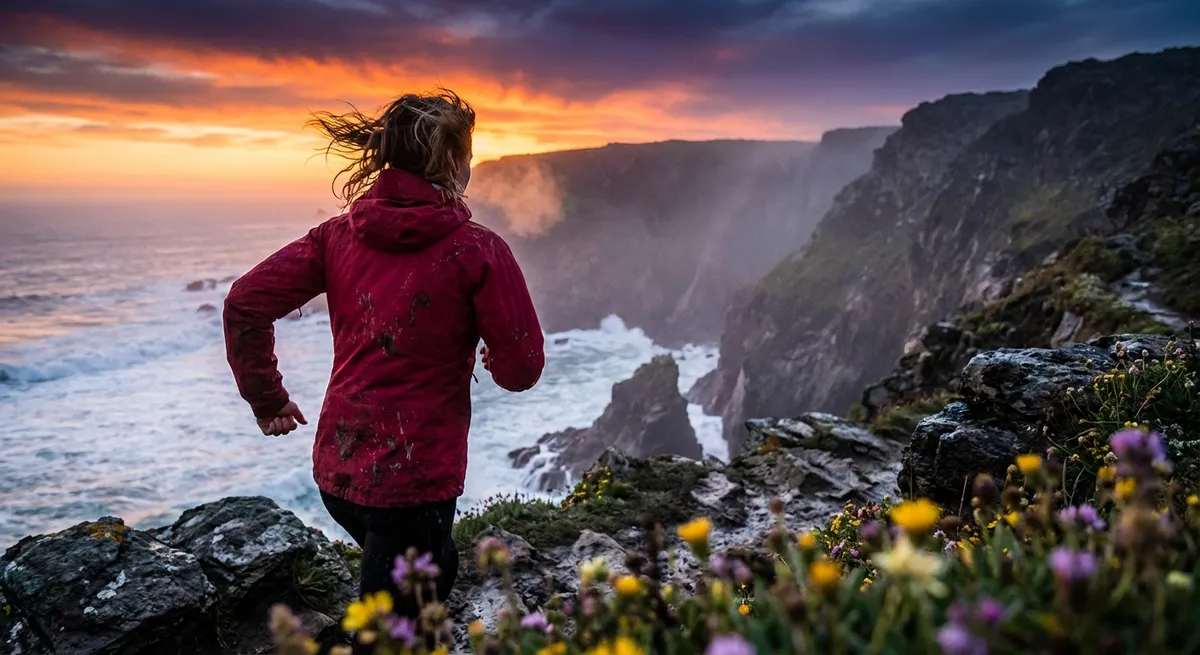
This guide shows you how to weave movement into your journeys so seamlessly that your trip is the workout. You’ll find five road-tested active travel tips, plus destination sparks to help you imagine where your next sweat-drenched sunrise might be.
Reimagine Cardio as Human-Powered Exploration
Trade the treadmill belt for real ground and real horizons. Cardio on the road becomes a way to map a new place with your own footsteps and pedal strokes. Instead of a 30-minute run that goes nowhere, imagine a dawn loop along Barcelona’s beach promenade, or a hill repeat session up to a temple overlooking Chiang Mai. The goal isn’t perfection—it’s presence: lungs burning, calves working, and a skyline you’ve never seen before rising with the sun.
Human-powered exploration—running, cycling, hiking, even power walking—also helps you arrive in your body after long flights or bus rides. A short, brisk outing can reset your internal clock, shake off stiffness, and give you an intuitive feel for a neighborhood faster than any guidebook. It’s also a safety bonus: those early runs help you learn the streets, traffic patterns, and escape routes if you need them.
Active Travel Tip #1: Turn Your First 24 Hours Into a “Movement Orientation”
Instead of collapsing into your bed after arrival, design a light but intentional movement ritual to claim the destination with your body:
- Take a 30–45 minute exploratory run or brisk walk around your stay—no pace goals, just curiosity.
- Pick 3 landmarks (a park, a waterfront, a viewpoint) to loop through; this creates a mental map for later.
- If running isn’t your thing, rent a bike and slow-roll the city at golden hour, stopping for photos and light stretching.
- Copenhagen, Denmark – Flat, bike-crazy streets: perfect for gentle orientation rides.
- Vancouver, Canada – Seawall paths where your jet lag can evaporate alongside ocean views.
- Lisbon, Portugal – Hill sprints up to miradouros (viewpoints) reward hard work with red-roof panoramas.
Destination sparks:
Let Terrain Be Your Coach (Instead of Gym Machines)
Travel puts you in front of ready-made training tools: staircases, steep cobblestones, sand dunes, forest trails, and rocky shorelines. Where a typical gym splits exercises into machines, the world demands full-body coordination—balancing on uneven surfaces, powering upward, and stabilizing under load. Each type of terrain challenges your muscles and nervous system differently, which keeps training fresh and your adventure mind sharp.
Sand forces your stabilizers to wake up; steep stairs load your glutes and quads; technical trails train footwork and reaction time. Even altitude can become a training ally, nudging your cardiovascular system to adapt. Instead of thinking, “I can’t train without my usual equipment,” start asking, “What is this landscape secretly built to train?”
Active Travel Tip #2: Design a “Terrain Circuit” From Local Features
Choose one natural or urban feature and spin it into a full-body session:
- Stair cities (like Valparaíso, Porto, or San Francisco):
- 5 rounds of steady stair climbs
- 10–15 push-ups at the top (or incline push-ups on a railing)
- Slow, controlled descents to build joint resilience
- Beach towns (like Bondi, Santa Monica, or San Sebastián):
- 15–20 walking lunges on wet sand
- 30–60 seconds of high-knee skips toward the shoreline
- 10–15 squat jumps, landing softly and resetting between each
- Mountain gateways (like Chamonix, Queenstown, or Banff):
- Short uphill hike intervals (5–8 minutes) with power hiking
- 2–3 minutes easy walk recovery
- Repeat 4–6 times, focusing on strong, efficient steps
This kind of circuit doubles as sightseeing: your “gym” is a staircase lined with street art or a coastal path that locals jog at sunset.
Pack a Minimalist Adventure Gym
Every kilo in your pack matters, but you don’t need much to stay strong on the move. A few compact tools unlock dozens of strength routines that can be done in a tiny hotel room, a rooftop, or a jungle bungalow porch. Combine them with bodyweight moves and you can maintain muscle, mobility, and explosiveness wherever you land.
Prioritize items that are light, versatile, and durable. A simple rule: if it can’t survive being stuffed into a backpack, it doesn’t come. With the right pieces, you’re never “between programs”—you’re just switching training backdrops, from skyscraper silhouettes to palm trees and granite cliffs.
Active Travel Tip #3: Build a 1–2 kg “Adventure Fitness Kit”
Curate a small kit that covers strength, mobility, and recovery:
- Mini resistance bands – For glute activation, shoulder warm-ups, and full-body strength flows.
- Light long band with handles or loops – For rows, presses, and assisted mobility work.
- Jump rope – Portable, intense cardio; perfect where running isn’t ideal.
- Compact massage ball or lacrosse ball – For rolling out calves, hips, and back after long transit days.
Sample “anywhere” workout using just your body and a band:
- 3 rounds:
- 12–15 banded rows (anchored to a sturdy object)
- 10–12 slow squats or split squats per leg
- 10–15 push-ups (on knees or elevated if needed)
- 20–30 seconds plank + 10 banded glute bridges
- Tokyo, Japan – Tiny hotel rooms where your bands and bodyweight become your ninja toolkit.
- Marrakesh, Morocco – Riad rooftops at sunrise: perfect for jump rope intervals between minarets and mountains.
- Mexico City, Mexico – Urban balconies and inner courtyards for quick band sessions before hitting the streets.
Destination sparks:
Sync Training With the Spirit of the Place
The culture and landscape around you can shape how you move. Surf towns invite you to paddle and pop-up. Alpine villages whisper “lace up your boots.” Desert outposts dare you to test your heat resilience. Instead of forcing your usual gym routine into every location, let the destination lead. This builds a deeper connection and taps into activities locals already excel at.
Training with the grain of a place also expands your athletic identity. Maybe you’re a gym lifter at home but become a sunrise paddler in Costa Rica or a stair-climbing urban athlete in Istanbul. Every destination can reveal a new version of your fitness self—strong in ways you never practiced in your comfort zone.
Active Travel Tip #4: Choose One “Signature Movement” Per Trip
For each destination, pick a primary activity that feels native to that landscape:
- Coastal & island escapes: surfing, stand-up paddleboarding, coastal trail runs, sea kayaking.
- Mountain & highland regions: day hikes, multi-day treks, trail running, via ferrata, snowshoeing.
- Historic, vertical cities: hill repeats, stair climbs to viewpoints, urban hiking through old quarters.
- Forest and lake retreats: trail walks, open-water swimming (with safety in mind), portage-style walks with a pack.
Then, commit to a mini challenge around it:
- “Surf every morning the swell allows in Ericeira.”
- “Summit a new hilltop viewpoint each day in Cape Town.”
- “Walk or run every major bridge in Budapest over a long weekend.”
- Cape Town, South Africa – Trail-run Lion’s Head or Table Mountain, then recover in the sea.
- Interlaken, Switzerland – Hike, paraglide, or kayak between lakes while the Alps tower above.
- Okinawa, Japan – Swim and snorkel in calm, clear waters while practicing breath control and efficiency.
Destination sparks:
Train for Recovery as Hard as You Train for Effort
Adventure fitness thrives on a delicate line: push enough to grow, not so hard you burn out mid-journey. Travel layers on extra stress—time changes, new foods, different beds—so recovery becomes performance-critical. Treat rest as a discipline, not an afterthought. A well-recovered body lets you say “yes” to one more trail, one more climb, one more sunrise hike.
Recovery on the road also has its own magic. A slow stretch session under palm trees or an easy walk through an old town at night can be both active recovery and a travel highlight. Think of it as low-intensity exploration: you’re still moving, still absorbing, just at a gentler frequency.
Active Travel Tip #5: Anchor Each Day With a 10-Minute Reset Ritual
No matter how hectic your itinerary, build in a short, non-negotiable reset:
- Morning mobility (5–8 minutes):
- Neck rolls, shoulder circles, cat-cow, hip circles, ankle rolls.
- 5–10 deep breaths focusing on long exhales to calm your nervous system.
- Evening downshift (5–10 minutes):
- Light stretching for calves, hips, hamstrings, and lower back.
- Legs-up-the-wall pose against a bed or wall to relieve travel-induced swelling.
Layer in recovery experiences the destination is famous for:
- Onsen in Japan or hammams in Turkey and Morocco as post-hike rituals.
- Thermal baths in Iceland or Budapest after long active days.
- Beachside sunset walks anywhere there’s a horizon to walk toward while your muscles gently unwind.
This daily reset keeps your engine tuned so every morning feels like an invitation, not a chore.
Conclusion
Adventure fitness is not a niche hobby; it’s a way of moving through the world with intent, curiosity, and courage. When your training becomes a passport, every staircase is a challenge, every shoreline a running track, every mountain a classroom for your lungs and legs. You stop separating “vacation” from “fitness” and start living in a playful, powerful middle ground where exploration and exertion are the same thing.
Pack light, move often, and let the terrain teach you. Let your heart pound in new languages. And as you chase horizons with sore legs and a wide-open mind, remember: your strongest self might be waiting at the crest of the next hill in a country you haven’t visited yet.
Sources
- Centers for Disease Control and Prevention – Physical Activity Basics - Overview of recommended activity levels for adults and health benefits of regular movement
- American Council on Exercise – Fitness on the Road - Practical strategies for staying active while traveling, including portable equipment tips
- Harvard T.H. Chan School of Public Health – Benefits of Physical Activity - Evidence-based breakdown of how regular exercise improves health and longevity
- Mayo Clinic – Exercise and Stress Relief - Explains how movement can help manage travel-related stress and jet lag
- National Park Service – Hiking Safety - Guidance on safely approaching outdoor activities like hiking in new environments