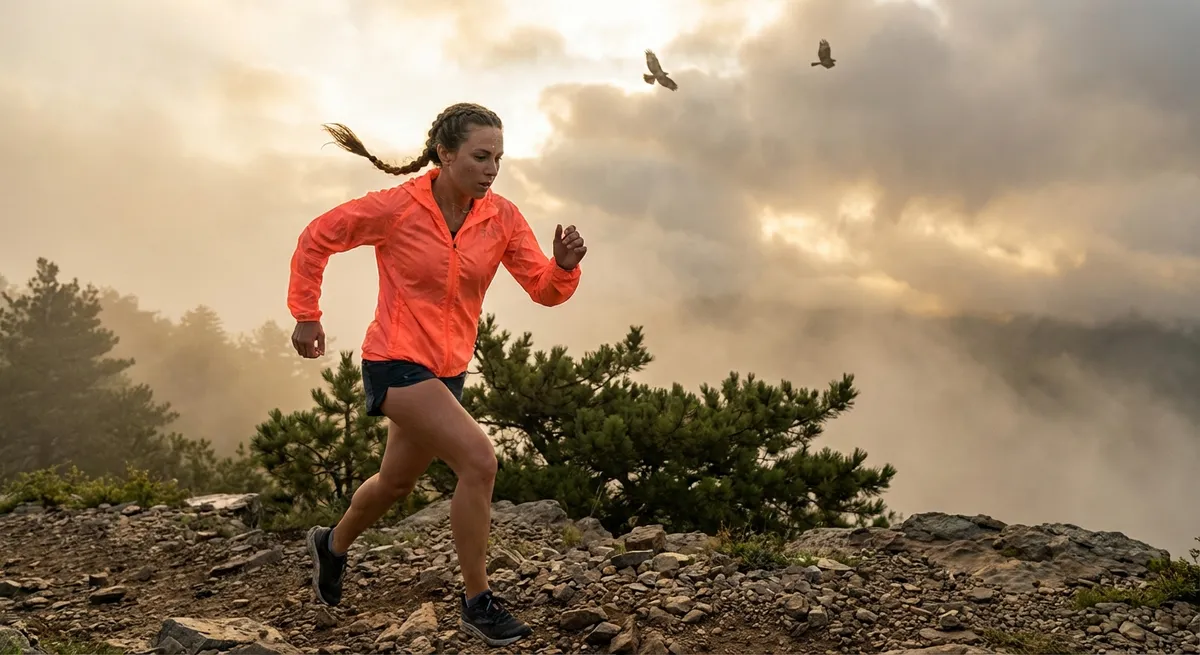
This guide is your passport to training anywhere, with five adventure-ready tips that help you move with purpose while exploring the world’s wild corners and vibrant cities.
Why the World Is the Ultimate Training Partner
Step outside and your workout instantly changes. Uneven trails challenge your balance, desert air plays with your breath, and seaside humidity tests your endurance. Instead of fighting these elements, you can turn them into allies.
Outdoor training taps into natural variability—wind resistance, changing terrain, and real-world obstacles—that indoor gyms simply can’t mimic. Research shows that exercising in nature can boost mood, reduce stress, and increase feelings of revitalization compared to indoor exercise, which can make your training feel less like a chore and more like an adventure you’re hungry to repeat. It’s also a powerful way to build functional fitness: climbing stairs in Lisbon readies you for mountain switchbacks, and sand sprints in Mexico prep your ankles for trail runs in Patagonia.
Most importantly, training outdoors while you travel connects workouts to memories. You won’t just remember “Tuesday’s leg day”; you’ll remember the sunrise you chased in Cape Town, the monastery steps you conquered in Greece, or the ocean swell you lunged beside in Bali.
Tip 1: Let the Landscape Decide Your Workout
Instead of forcing your usual gym routine onto every destination, ask: “What does this place invite my body to do?”
- Coastal cities (think Barcelona, Sydney, Cape Town): Use long promenades for tempo runs, pier benches for push-ups and tricep dips, and sand for walking lunges or barefoot stability drills.
- Mountain towns (Chamonix, Banff, Queenstown): Turn hikes into interval sessions—push to the next switchback, hike easy to recover, repeat. Use rocks or logs for step-ups and glute bridges at viewpoints.
- Historic cities (Athens, Lisbon, Quito): Seek out staircases and hills. Climb at a steady pace, descend to recover, then explore side streets as walking cooldowns.
- Forests and national parks (Yosemite, the Black Forest, Fiordland): Mix trail running with bodyweight circuits at clearings. Think 5-minute jog, then 3 rounds of squats, push-ups, and planks.
The more you let the environment dictate your session, the more unique, memorable, and effective your workouts become. You’re not just visiting a place—you’re training with it.
Tip 2: Pack a “Micro Gym” That Fits in Your Daypack
A clever travel kit can turn any courtyard, campsite, or hostel rooftop into a training ground without weighing down your bag.
Consider packing:
- A light resistance band or loop band for rows, band walks, and glute activation on the go.
- A compact jump rope for high-intensity sessions in tight spaces like hotel courtyards or quiet plazas.
- A travel yoga mat or microfiber towel for core and mobility work on uneven or dusty ground.
- A collapsible water bottle that doubles as a makeshift weight when filled.
In cities like Mexico City or Tokyo, use bands and bodyweight circuits in small parks between sightseeing stops. In beach towns, combine band exercises with barefoot sand work to challenge your stabilizers. On long road trips, break up the drive with 10-minute “micro sessions” at scenic overlooks—planks, band rows using a railing, squats, and calf raises.
Your gear shouldn’t compete with your spirit of freedom. A tiny micro gym is enough to keep your training sharp while leaving room in your pack for what matters: curiosity and a spare layer.
Tip 3: Turn Local Life Into Your Movement Map
Instead of planning workouts and then sightseeing, weave the two together so every movement has a destination.
- Run a sunrise route to a landmark: Jog from your stay to a fortress in Dubrovnik, a temple in Chiang Mai, or an overlook in Rio. Use the climb as your “hill set,” then walk back through waking streets as recovery.
- Walk or bike instead of rideshares: In cities like Amsterdam, Copenhagen, or Vancouver, opt for bike lanes and riverside paths. Each commute becomes low-intensity cardio that adds up over a trip.
- Join local movement culture: Try beach volleyball in Rio, tai chi in a Hong Kong park, outdoor calisthenics parks in Berlin, or public salsa in Medellín. You’ll train, learn, and connect all at once.
- Design “photo checkpoints”: Mark 4–6 scenic stops on a map—an overlook, a mural, a hidden square. Jog or power-walk between them, do a quick 3–5 minute circuit at each stop, and capture a photo as your “badge.”
This approach transforms your workout from an isolated chore into a narrative—each squat, sprint, or step is threaded into the story of the city you’re discovering.
Tip 4: Respect the Elements, Don’t Fight Them
Adventure doesn’t mean recklessness. To keep your outdoor training sustainable, you need to partner with the climate, not battle it.
- Heat and humidity: Plan tougher sessions at sunrise or just before sunset. In destinations like Dubai, Bangkok, or Cartagena, shorten intervals, seek shade, and know the signs of heat exhaustion (dizziness, nausea, rapid pulse).
- High altitude: In places like La Paz or Cusco, drop your intensity the first few days. Opt for slow hill walks over intense sprints and give your body time to adapt.
- Cold and wind: In Patagonia or Iceland, use dynamic warm-ups and dress in layers you can peel off mid-session. Short, powerful movements (like hill sprints or brisk stair climbs) can feel better than long, slow slogs.
- Air quality: In busy urban centers, check local air quality reports. On poor-air days, shift training to parks with more trees or scale back intensity to protect your lungs.
Tuning into the environment is part of the joy of outdoor training. It teaches you to be adaptable, patient, and resilient—exactly the qualities that make you a stronger traveler and athlete.
Tip 5: Anchor Your Workouts to Epic Moments, Not Just Time Blocks
Travel can scramble routines—early ferries, late trains, long hikes. Instead of obsessing over strict schedules, anchor your workouts to experiences you don’t want to miss.
- After a scenic view: Just reached a clifftop in Santorini or a panoramic ridge in the Dolomites? Drop into a 10-minute strength circuit—squats, lunges, push-ups, and a long plank while you soak in the view.
- Before a big meal: In food capitals like Rome, Hanoi, or Lima, knock out a quick interval run or stair session before dinner. You’ll arrive more energized and ready to fully enjoy the experience.
- Post-transit reset: After long flights or train rides, do a mobility flow outside your accommodation: hip circles, walking lunges, shoulder rolls, and gentle twists to reawaken your body.
- At sunrise or sunset: Choose one “golden hour” session per destination—sunrise yoga on a Sardinian beach, sunset sprints on a California bluff, or mobility work facing the Sahara horizon.
By linking movement to meaningful moments, your workouts become rituals that frame your day, not obstacles that steal time from it.
Destination Sparks: Where to Take Your Outdoor Training Next
If you’re dreaming up your next Fit Voyaga chapter, here are a few destinations that pair perfectly with adventure-fueled workouts:
- Cape Town, South Africa: Trail runs on Lion’s Head, staircase climbs in Sea Point, and oceanfront circuits along the Promenade—every session comes with Atlantic or Table Mountain views.
- Queenstown, New Zealand: Lakeside sprints, alpine hikes turned into interval climbs, and bodyweight circuits on quiet docks at dawn.
- Lisbon, Portugal: Hill repeats on cobblestone streets, stair sessions in Alfama, and riverside cycling along the Tagus with castle views.
- Vancouver, Canada: Seawall runs, forest workouts in Stanley Park, and mountain trail training within a short ride from downtown.
- Bali, Indonesia: Rice-terrace jogs in Ubud, beach circuits in Canggu, and sunrise yoga facing volcano silhouettes.
Each place offers its own “training flavor”—from sea-level speedwork to high-altitude hiking strength. Choose destinations that complement your goals: mountains for power and endurance, coastal routes for long aerobic sessions, and bustling cities for stair and walking volume.
Conclusion
Outdoor workouts aren’t a backup plan when you’re far from the gym—they’re an upgrade. When you carry your fitness into the world, each destination becomes more vivid: hills are no longer just scenery, but challenges; plazas aren’t just photo ops, but training grounds; coastlines aren’t just backdrops, but tracks.
Pack light, move often, and let the landscape coach you. The more you train out there—on ridges, riversides, and rooftops—the more you’ll discover that the strongest version of you doesn’t live in a single place. It’s forged across continents, carved by trails, and carried in your heartbeat wherever you roam.
Sources
- Harvard Health Publishing – Exercising Outdoors Has Many Benefits - Overview of physical and mental health benefits associated with outdoor exercise
- National Park Service – Hiking Safety - Practical guidance on staying safe and prepared during outdoor activities in parks and wild spaces
- Centers for Disease Control and Prevention – Extreme Heat and Physical Activity - Information on recognizing and preventing heat-related illness during activity
- U.S. Environmental Protection Agency – Air Quality and Exercise - Insight into how air quality can affect outdoor physical activity and health
- American Council on Exercise – Benefits of Green Exercise - Research-backed explanation of why exercising in natural environments can enhance motivation and well-being