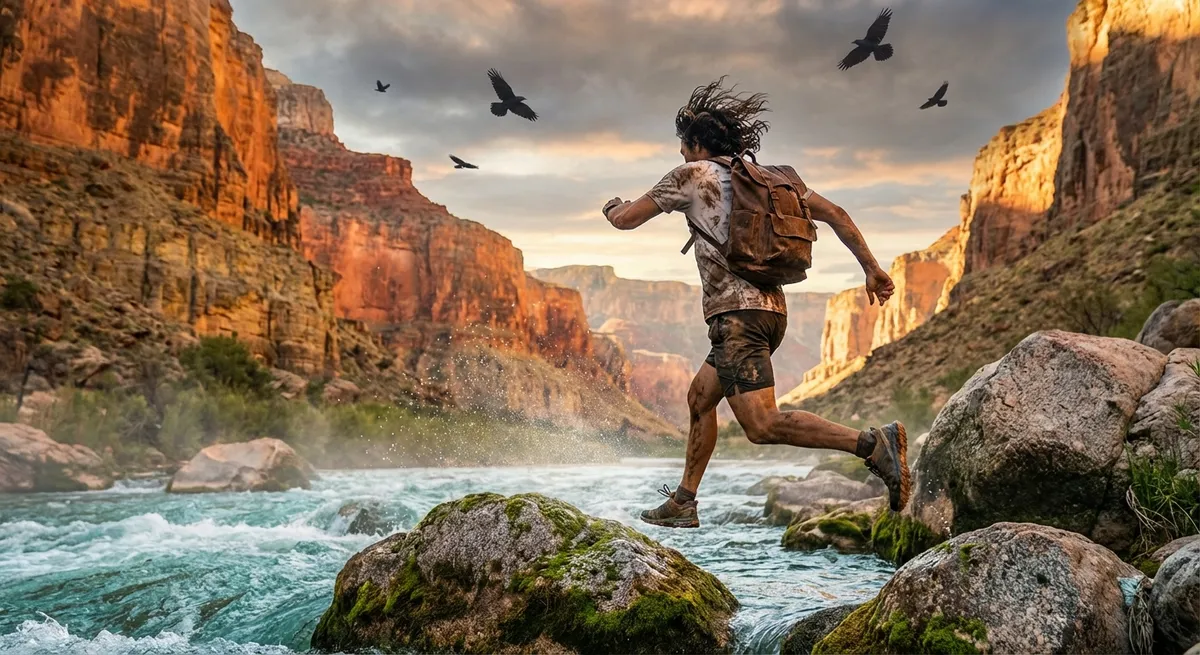
This is your invitation to train for experiences, not just aesthetics—to build the kind of strength that lets you say “yes” to the wildest detours.
Why Adventure Fitness Changes the Way You Travel
Adventure fitness is the sweet spot where movement, exploration, and curiosity collide. You’re not just ticking sights off a list—you’re climbing them, paddling them, running through them, and breathing them in.
Being adventure-fit unlocks:
- Spontaneity: A last-minute trek to a hidden waterfall in Costa Rica, an unexpected bike ride through the Tuscan hills, or a sunrise stair sprint up Montmartre in Paris feels exciting, not exhausting.
- Resilience: Delayed flights, long buses, bumpy trails—your body recovers faster, your mind stays clearer, and you’ve got energy left for the good stuff.
- Deeper connection: When you hike local trails, join a beach workout, or paddle with locals at dawn, you experience a place from the inside out, not just behind a camera lens.
- Confidence: You stop wondering, “Can I do this?” and start asking, “What else can I do?” Elevation, distance, and challenge become thrilling variables instead of limiting factors.
Adventure fitness is less about perfect routines and more about adaptable strength—so you’re ready for whatever the world throws your way: a long ridge walk in the Dolomites, a coastal trail run in Cape Town, or a kayaking day in Thailand’s emerald bays.
Destination Highlights for the Adventure-Fit Traveler
To spark your next trip, here are a few places where your fitness becomes your golden key:
1. Queenstown, New Zealand – Adrenaline Capital of the South
Set against the Remarkables mountain range and Lake Wakatipu, Queenstown is a playground for anyone who loves movement. Think steep trail runs up Ben Lomond Track, cold-water dips in the lake, mountain bike descents in the Skyline Bike Park, and via ferrata-style climbs. Your stamina becomes your ticket to quieter ridgelines and sunrise summits nobody else bothered to sweat for.
2. Azores, Portugal – Atlantic Isles of Endless Trails
The Azores feel like they were carved specifically for hikers, trail runners, and ocean-lovers. Volcanic crater lakes, cliffside paths, hot springs, and coastal viewpoints are all within reach if your legs and lungs are ready. You can trek around Sete Cidades at sunrise, then paddle along the coast or swim in natural lava pools by afternoon.
3. Banff & Lake Louise, Canada – Alpine Strength Sanctuary
Deep blue lakes, glacier-fed rivers, and sharp peaks make this a haven for hikers, climbers, and paddlers. The fitter you are, the more you can link trails together, push to higher viewpoints, and carry gear for longer backcountry days. Hill repeats at altitude pay off when you’re cruising up to viewpoints like Plain of Six Glaciers or Cascade Amphitheatre.
4. Chiang Mai, Thailand – Temples, Trails, and Jungle Heat
Chiang Mai offers a fusion of cultural immersion and sweaty adventure. Trail run or hike up to Wat Pha Lat and Doi Suthep at dawn, then cool off with a river float or a slow stroll through the Old City. The tropical heat turns every climb into a mini endurance test, but balanced with Thai massages and nourishing street food, it’s adventure recovery at its finest.
5. Cape Town, South Africa – Mountains Meet the Ocean
Table Mountain, Lion’s Head, and endless coastal paths make Cape Town a dream for those who like their workouts with a view. Your strength unlocks everything from sunrise scrambles overlooking the city to long coastal runs along the Atlantic. Add in surfing lessons at Muizenberg or sea kayaking with dolphins in Simon’s Town, and your days become a series of moving postcards.
5 Active Travel Tips for the Fitness-Fueled Explorer
Here’s how to keep your body primed for adventure while you roam, without feeling like you’re chained to a gym schedule.
1. Train for Terrain, Not Just for Looks
Instead of chasing arbitrary gym numbers, prepare for what your destination actually demands.
- Heading for mountains? Work on hill repeats, stair climbs, and loaded carries (like farmer’s walks) to mimic hiking with a pack.
- Eyeing surf or paddle adventures? Prioritize shoulder stability, core strength, and swimming intervals.
- Planning for long city days on foot? Practice long walks, low-intensity jogs, and standing mobility work to toughen your “travel legs.”
Think of every training session as a rehearsal for a future summit, a surf session, or a trail you haven’t met yet.
2. Pack a “Micro Gym” That Fits in Your Daypack
Your gear should be lightweight, versatile, and easy to use in a hostel courtyard, airport corner, or beach at sunrise.
Consider packing:
- Resistance bands: Great for rows, glute activation, and shoulder work.
- A compact jump rope: Perfect for quick, high-intensity sessions or warm-ups.
- Travel-friendly yoga strap or light towel: For stretching tight hips and hamstrings after long buses or flights.
With just bodyweight plus a couple of simple tools, you can create strength circuits in tiny hotel rooms, on balconies, or in shady park corners.
3. Turn Transit Days into Recovery + Mobility Missions
Travel fatigue is real—but you can use those “lost” hours to make your body feel better, not worse.
On planes, trains, and buses:
- Stand or walk the aisle periodically, doing ankle rolls and calf raises to keep blood flowing.
- In your seat, hit neck stretches, seated twists, and gentle hamstring stretches.
- Once you arrive, spend 10–15 minutes on hip openers, glute stretches, and thoracic rotations to reset your posture.
Treat every arrival as a chance to “reboot” so you can hit the ground ready for the next adventure, instead of slogging through jet lag and stiffness.
4. Let Your Itinerary Be Your Workout Plan
On the road, your schedule is often more fluid—and that’s an advantage. Instead of forcing rigid sessions, build movement into the heart of your travel days.
Ideas to make this seamless:
- Choose one “movement mission” per day: a hike, a walking food tour, a sunrise run, or a local bike rental loop.
- Swap short taxis for 20–40 minute walks when safe and feasible.
- Look for local group activities: beach bootcamps, outdoor yoga, or community runs where you can meet other active travelers and locals.
Your body still gets the volume and variety it needs, but movement becomes the highlight, not an obligation squeezed in.
5. Fuel and Recover Like You Plan to Go Again Tomorrow
The boldest adventures fall flat if your body can’t bounce back. Recovery doesn’t need to be fancy, but it does need to be intentional.
Aim to:
- Hydrate early and often, especially at altitude or in heat. Consider an electrolyte packet in your daypack for longer hikes or rides.
- Anchor your day with at least one protein-rich meal to support muscle repair—think grilled fish, lentil curries, eggs, tofu, or lean meats.
- Protect your sleep: earplugs, an eye mask, and a loose wind-down routine (gentle stretching, a short walk after dinner) can make an enormous difference.
Your goal isn’t to “survive” the trip—it’s to sustain the kind of energy that lets you say “yes” to that extra sunrise paddle or unexpected side trail.
Conclusion
Adventure fitness is your permission slip to travel with your whole body awake—to feel your heart pound on a ridgeline, your muscles burn halfway up a cliff path, and your lungs fill with air that smells nothing like home.
You don’t have to be the strongest, fastest, or fittest person out there. You only have to be just fit enough to keep stepping into the unknown, again and again.
Train not for the mirror, but for the moments: the first glimpse of a hidden cove after a brutal stair climb, the laughter shared at a mountain hut after a long ascent, the quiet pride of knowing your body carried you there.
The world is wide, and your legs, lungs, and courage are your greatest travel companions. Where will you test them next?
Sources
- CDC – Physical Activity Basics – Overview of recommended activity levels and health benefits that support active travel lifestyles
- American College of Sports Medicine – ACSM Guidelines for Exercise Testing and Prescription – Evidence-based standards for cardiovascular, strength, and mobility training
- Harvard T.H. Chan School of Public Health – Travel and Health – Guidance on staying healthy and active while traveling, including hydration and fatigue management
- Parks Canada – Hiking and Trekking Safety – Practical advice on preparing for mountain and backcountry hikes in destinations like Banff and beyond
- New Zealand Department of Conservation – Plan My Walk – Official resource on trail planning, terrain awareness, and preparation for active adventures in New Zealand