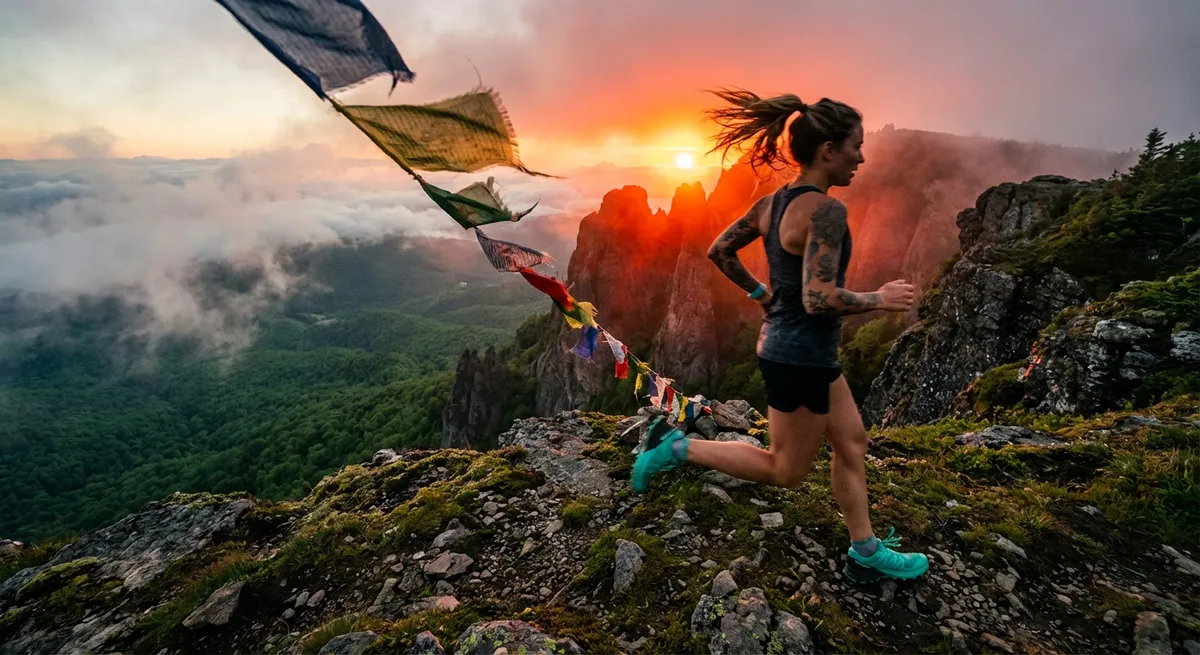
Let’s turn your next journey into a moving, sweating story you can’t wait to tell.
Why Outdoor Workouts Hit Different on the Road
There’s a reason a hill sprint in Lisbon or a hike in Patagonia feels more electric than the same workout at home. Changing landscapes challenge your body and wake up your senses in ways a familiar gym never will.
When you train outdoors while traveling, your stabilizer muscles are constantly reacting to uneven ground, shifting weather, and new terrain—from sand that steals power on every step to cobblestones that demand better balance. That unpredictability not only builds strength and endurance; it sharpens your coordination and focus.
Sunlight and fresh air boost mood, regulate your sleep cycles, and help fight jet lag—huge for travelers who want to hit the ground running instead of collapsing on a hotel bed. Moving outside also connects you to the rhythm of local life: runners along the Seine at dawn, surfers cycling to the beach in Bali, hikers sharing trail snacks in Banff. Your workout becomes both training session and cultural immersion.
Most of all, outdoor workouts on the road turn “I visited” into “I experienced.” You don’t just see the cliff, you climb it. You don’t just photograph the canyon, you descend into it. The memory lives in your muscles as much as your camera roll.
Destination Highlights: Where the World Becomes Your Gym
Certain places seem built for the traveler who packs running shoes before anything else. Here are a few landscapes that practically beg you to lace up and move.
Coastal Energy: Cape Town, South Africa
Cape Town is a dream for anyone who wants their workouts served with ocean spray and mountain silhouettes. Run or power-walk the Sea Point Promenade as the Atlantic crashes beside you, then tackle Lion’s Head at sunrise for a steep, fast hike that doubles as a leg-burning interval session. Cap it off with a cold-water dip at Clifton Beach to ice your muscles the adventurous way.
Urban Grit & River Flow: Tokyo, Japan
Tokyo is an ultra-kinetic city that rewards early risers. Hit the paths around the Imperial Palace before the crowds, using each lap as an interval. Many locals run here, so you instantly plug into the city’s fitness culture. Then detour to the Sumida River, where you can mix bodyweight circuits (push-ups, dips on benches, stair sprints) with easy jogs along the water.
Alpine Power: Chamonix, France
In Chamonix, the mountains aren’t the backdrop—they’re the training partner. Take on steep, switchback trails that transform a simple hike into a glute and lung workout. Use trekking poles for full-body engagement, and treat every viewpoint as a rest interval. In winter, cross-country skiing becomes a killer cardio-and-strength combo that will light up your legs, core, and lungs.
Jungle Heat: Ubud, Bali
Ubud’s rice terraces and jungle trails are a paradise for slow, powerful movement. Start with a sunrise walk or run along the Campuhan Ridge Walk, using the rolling hills as organic interval training. Finish with a mobility and yoga session in an open-air pavilion where the humidity challenges your endurance and the sounds of the jungle become your workout playlist.
Desert Endurance: Sedona, Arizona, USA
Sedona’s red rock formations and cactus-lined trails make every workout feel mythic. Choose a moderate trail like Cathedral Rock or Bell Rock and use rock features as natural obstacles—step-ups, elevated push-ups, or short hill repeats. The dry air and elevation force you to respect your limits and tune in deeply to your breathing.
5 Active Travel Tips for Fitness Adventurers
You don’t need a packed schedule of tours to feel like you “did” a destination. Layer these five strategies into any trip and you’ll come home stronger, not just sunburned.
1. Design Your Days Around “Anchor Sweat Sessions”
Instead of squeezing in random workouts, build your days around one “anchor” outdoor session—something that makes your heart race and your camera roll explode.
- Morning: Hill sprints up a local overlook, a coastal run, or a brisk hike.
- Afternoon: Swim in the ocean, lake, or hotel pool to recover and cool down.
- Evening: Gentle mobility or walking tour to keep blood flowing and reduce soreness.
Choose one big movement moment daily and let the rest of your plans orbit around it. You’ll explore deeper, eat with more appetite, and sleep like a rock.
2. Pack a Micro-Gym That Fits in Your Daypack
You don’t need hotel weight rooms when your suitcase is dialed in. Build a minimalist “micro-gym”:
- Light resistance band: For rows, pulls, and glute activation before runs.
- Mini loop band: Perfect for quick hotel-room leg circuits.
- Jump rope: Compact cardio for when you’re short on time or space.
- Travel yoga mat or towel: For mobility sessions in parks, rooftops, or beaches.
With this kit, any patch of grass, plaza, or quiet corner becomes your training zone—no excuses, no membership required.
3. Let the Landscape Program Your Workout
Use the environment as your coach instead of following a rigid plan from home.
- Stairs in Lisbon or San Francisco? Turn them into sprint intervals and walking lung burners.
- Boardwalk, promenade, or river path? Mix tempo runs with bodyweight circuits every 5–10 minutes.
- Rocky shoreline or forest trail? Focus on agility and balance with side steps, single-leg hops, and controlled descents.
- Pyramid session: 1-minute hard effort, 1-minute easy; then 2 up/2 down; build to 4 and back.
- Sight-based intervals: Run hard until the next landmark (bridge, statue, viewpoint), then walk or jog to recover.
Structure ideas:
You adapt to the land, and your body becomes endlessly adaptable in return.
4. Make Movement Your Primary Mode of Exploration
Swap tours and taxis for locomotion. Build your itinerary around human-powered discovery:
- Rent a bike to city-hop between neighborhoods, galleries, and food stalls.
- Walk point-to-point routes instead of looping back—metro or bus home if needed.
- Choose “viewpoint detours”: anytime you see a staircase, side street, or trailhead, follow it for 5–10 minutes of bonus movement and a surprise perspective.
Your step count climbs, your cardio improves, and you spot details—smells from street food, local pickup soccer games, hidden murals—you’d never notice from a car window.
5. Treat Recovery as Part of the Adventure, Not an Afterthought
Hard travel days plus intense workouts can wipe you out if you ignore recovery. Build it into your trip like it’s an activity, not a chore.
- Hydrate like it’s your job, especially in hot or high-altitude destinations.
- Book active recovery experiences: thermal baths, natural hot springs, gentle sea swims, or easy kayak sessions.
- Sleep with purpose: eye mask, earplugs, and a loose bedtime routine to keep your body clock somewhat stable.
- Mobility rituals: 10–15 minutes of stretching before bed—hips, hamstrings, calves, and upper back—to offset long flights and big hikes.
You’ll wake up ready to tackle another peak, trail, or city loop instead of limping into the nearest café.
Conclusion
The world is full of people who have “been” places. You’re not one of them. You’re the one who races the sunrise up foreign hills, measures distances in sweat and smiles, and comes home with stronger legs and wilder stories.
Outdoor workouts don’t interrupt your travels—they’re how you experience them fully. From alpine ridgelines to riverfront paths, from desert canyons to neon-lit city loops, every destination offers a new way to test your body and expand your spirit.
Pack your curiosity and your courage. Let your passport and your pulse lead the way. The next stamp in your passport should come with sore calves, salty skin, and the kind of satisfaction that only arrives when you’ve truly moved through a place—not just passed through it.
Sources
- Centers for Disease Control and Prevention – Physical Activity and Health – Overview of the health benefits of regular physical activity, including cardiovascular and mental health impacts.
- Harvard Health Publishing – Listening to Your Body: How Exercise Affects the Brain – Explores how movement and outdoor activity support mood, focus, and mental well-being.
- American College of Sports Medicine – Physical Activity Guidelines – Evidence-based recommendations for exercise intensity, frequency, and type.
- National Park Service – Hiking Tips – Practical guidance on hiking safety, hydration, and terrain awareness relevant to outdoor workouts on trails.
- World Health Organization – Sun Protection and Outdoor Activity – Information on safe exposure to sunlight and UV protection for those training outdoors.