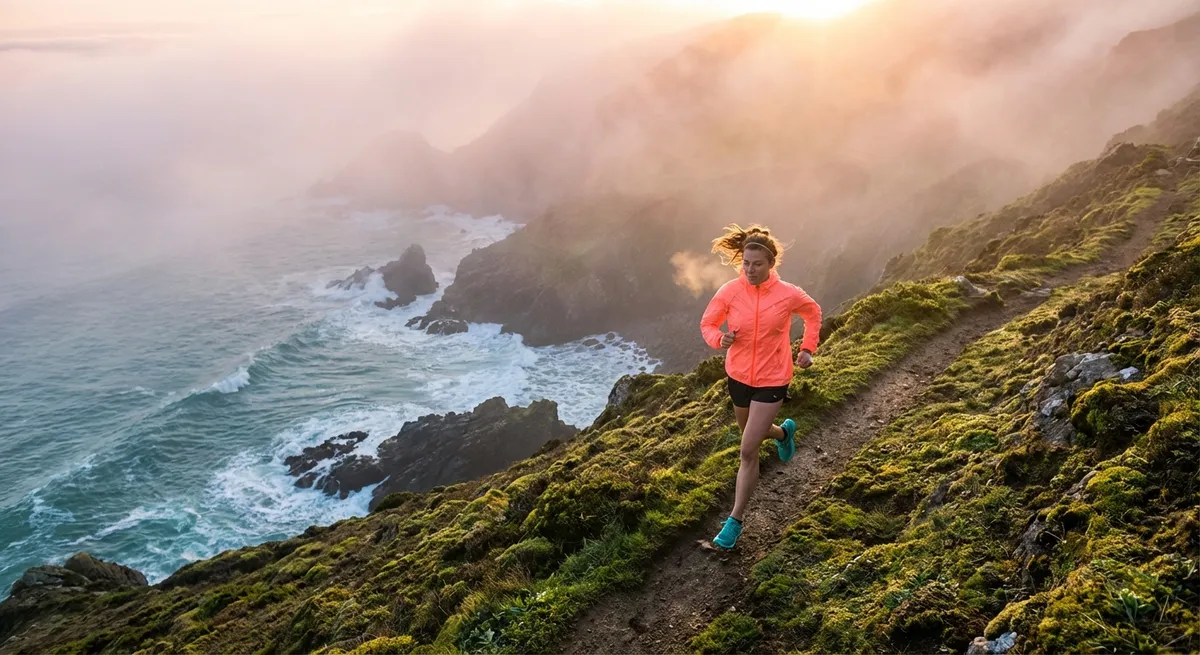
Below, you’ll discover bold fitness destinations that turn training into a story worth telling, plus five road-tested active travel tips to keep your body strong and your spirit wide awake wherever your passport takes you.
Iceland: Fire, Ice, and Full-Body Flow
In Iceland, the landscape is your training partner—unpredictable, raw, and wildly rewarding. One day you’re powering up black-sand dunes near Vík, the next you’re hiking across a glacier tongue, your calves burning as you crunch over ancient ice. It’s a place where every workout feels like you’re moving through another planet.
Base yourself in Reykjavík for access to coastal runs, geothermal pools for recovery, and day trips into national parks. Hike the trails around Þingvellir, using elevation changes as natural interval training. On the south coast, challenge your legs on Skógafoss’s stair climb, then drop into mobility work at the base of the falls. Finish your days with contrast therapy: a chilly Atlantic dip followed by a soak in a hot spring—nature’s ice bath and sauna combo.
Iceland rewards the prepared athlete: layers for mercurial weather, solid footwear for mixed terrain, and a strong posterior chain for all that uphill power. Every step reminds you that your body isn’t just along for the ride—it’s the vehicle that gets you deep into the wild.
Kyoto and the Japanese Alps: Quiet Strength in Sacred Landscapes
Japan offers a different kind of fitness high: one built on precision, ritual, and the discipline of slow endurance. Start in Kyoto, where dawn runs weave through quiet streets, temple gates, and riverside paths. The city’s gentle slopes are perfect for tempo runs or walking lunges between bridges, while mossy shrine staircases double as natural plyometric workouts.
Then turn your compass toward the Japanese Alps—areas like Kamikōchi or Hakuba—for day hikes that demand both stamina and presence. Ascents are steady and meditative, the kind of climbs that invite you to sync your breath with your steps. Mountain huts provide structured stopping points, turning your hike into an elegant interval session: climb, refuel, stretch, repeat.
Even recovery is an art form here. Onsen (hot spring) culture encourages pre- and post-hike rituals: warm soaks to relax muscles, mindful breathing in steam-filled air, and quiet reflection that strengthens mental endurance. Japan shows that strength doesn’t always roar; sometimes it walks, breathes, and bows.
Cape Town, South Africa: Ocean, Cliffs, and City Grit
Cape Town feels like an open-air training ground carved between ocean and stone. Table Mountain and Lion’s Head dominate the skyline, daring you to lace up and climb. The ascents are steep and technical in places, turning your hike into a full-body workout where hands, core, and glutes pull their weight with every step.
Early mornings along the Sea Point Promenade set the tone with oceanfront runs, bodyweight circuits on park installations, and impromptu sprints along the seawall. Venture to Camps Bay or Llandudno for sand sprints and surf sessions that hammer your stabilizers and ignite your lungs. You can move from strength work on the rocks to cardio in the waves in a single afternoon.
Cape Town blends rugged outdoors with urban energy—think post-hike yoga in neighborhood studios, healthy cafes stacked with high-protein dishes, and local athletes who treat the city like a playground. It’s the perfect destination if you want your training to feel both wild and wired.
The Dolomites, Italy: Vertical Playgrounds for the Brave
The Dolomites are sculpted for people who love going up. Jagged limestone peaks, via ferrata routes, and technical trails turn every outing into an adventure workout. Here, cardio is a long, lung-burning ascent, and strength is hanging onto a cable as you edge along cliffs with thousand-meter drops at your side.
Begin with less exposed day hikes to build altitude tolerance and trail confidence. Use the steep climbs as natural hill repeats: pick a segment, push hard, hike back down, repeat. When you’re ready, try a beginner-friendly via ferrata under guide supervision—clipping into cables, moving deliberately, engaging your core and grip like never before.
Mountain refuges (rifugi) make multi-day treks possible without heavy loads, letting you focus your energy on performance, not pack weight. Evenings bring slow stretching sessions on wooden decks, hearty meals for glycogen refueling, and sunsets that remind you exactly why you trained so hard back home.
Patagonia, Chile & Argentina: Endurance at the Edge of the World
Patagonia is where your endurance dreams and your grit meet face to face. In Torres del Paine or Los Glaciares, wind howls down valleys, weather flips in minutes, and distances feel bigger than they look on the map. Multi-hour treks across open steppe and switchback-heavy climbs to viewpoints like Laguna de los Tres or Mirador Las Torres turn your day into a rolling test of stamina.
The terrain constantly shifts—from rooty forest trails to rocky moraines and swinging suspension bridges—demanding agility, ankle strength, and sharp focus. Packs are heavier here, so you’ll feel every set of deadlifts and core sessions you banked before the trip. But the reward is unmatched: granite towers glowing at sunrise, icebergs drifting across turquoise lakes, condors catching thermal lift overhead.
In Patagonia, you learn to pace yourself, fuel consistently, and respect the environment’s power. Your body becomes a quiet, determined engine, and your mind expands to match the scale of everything around you.
5 Active Travel Tips for the Adventure-Driven Athlete
1. Train for the Terrain, Not Just the Trip
Instead of “getting in shape for vacation,” mirror the specific demands of your destination. If you’re heading to the Dolomites or Patagonia, build progressive hill repeats, loaded step-ups, and long weekend hikes with a pack into your routine. For coastal or city-based destinations like Cape Town, mix in stairs, sand running, and agility drills.
Simulating terrain—incline treadmill sessions, stairwell climbs with a backpack, balance work on unstable surfaces—helps your muscles adapt before you land. You’ll arrive ready to enjoy the challenge, not simply endure it.
2. Pack a Micro-Gym in Your Daypack
Your carry-on can double as a mobile training studio. Slip in a pair of light resistance bands, a mini-loop band, and a compact jump rope. These tools turn hostel courtyards, hotel balconies, and quiet plazas into impromptu gyms.
Use bands for glute activation before long hikes, upper-body pulls after days dominated by pushing and climbing, and jump rope rounds for quick conditioning when you’re short on time. This simple kit keeps your training balanced when your destination naturally emphasizes only certain muscle groups.
3. Build Recovery Into Your Itinerary
Adventurous travelers often overdo it: big mileage, little rest. Plan “active recovery” days the same way you plan bucket-list hikes or runs. Choose mellow walks, gentle yoga sessions, easy swims, or visits to hot springs and saunas to let your body recalibrate.
Schedule at least one lower-intensity day after particularly big efforts or altitude jumps. Hydration, stretching, and sleep become non-negotiable performance tools. Protect recovery, and you’ll climb higher and go farther over the span of your trip.
4. Eat Like an Athlete, Explore Like a Local
Your body is doing serious work—fuel it with intention. Scout local options (markets, cafes, grocers) ahead of time so you know where to find complete meals, quality carbs, and protein. Embrace regional foods: hearty stews in Patagonia, fish and root vegetables in Iceland, rice bowls and miso soups in Japan, Mediterranean plates in Italy.
Keep portable, nutrient-dense snacks like nuts, jerky, dried fruit, or protein bars for long stretches between meals. Think like an endurance athlete: small, frequent fueling before you’re famished, and a solid recovery meal within a couple of hours after your hardest efforts.
5. Respect Altitude, Weather, and Your Own Limits
Adventure is about pushing edges—not sprinting past your safety margins. Before tackling high-altitude or remote routes, understand common risks: altitude sickness, dehydration, temperature swings, and navigational challenges. Start with shorter, less exposed objectives to learn how your body responds.
Know when to turn back if storms roll in or fatigue hits harder than expected. Travel with maps, backup navigation, appropriate layers, and enough water and calories. The strongest adventurers aren’t the ones who never quit—they’re the ones who know exactly when to pivot so they can get out there again tomorrow.
Conclusion
Fitness destinations are more than pretty backdrops; they’re catalysts. They reshape what you think your body can do, and they etch those discoveries into mountain trails, coastlines, temples, and city skylines. When you train with intention and travel with curiosity, every summit, shoreline, and stairwell becomes part of your story.
You don’t need permission to chase this version of yourself—the one who sprints for the sunrise, leans into the climb, and lands back home feeling more alive than when you left. The world is waiting. Pack your shoes, your courage, and a one-way ticket to your next wild workout.
Sources
- Centers for Disease Control and Prevention – Healthy Travel Tips - Guidance on staying healthy and active while traveling, including hydration, altitude, and illness prevention
- American College of Sports Medicine – Hiking and Backpacking Guidelines - Evidence-based advice on preparing physically for hiking-focused trips
- International Association for Medical Assistance to Travellers – High Altitude Travel & Altitude Illness - Detailed information on acclimatization and recognizing altitude-related risks
- Iceland Travel – Hiking in Iceland - Practical overview of trail types, conditions, and preparation for Iceland’s terrain
- Japan National Tourism Organization – Outdoor Activities - Official guide to hiking, mountain regions, and active experiences across Japan