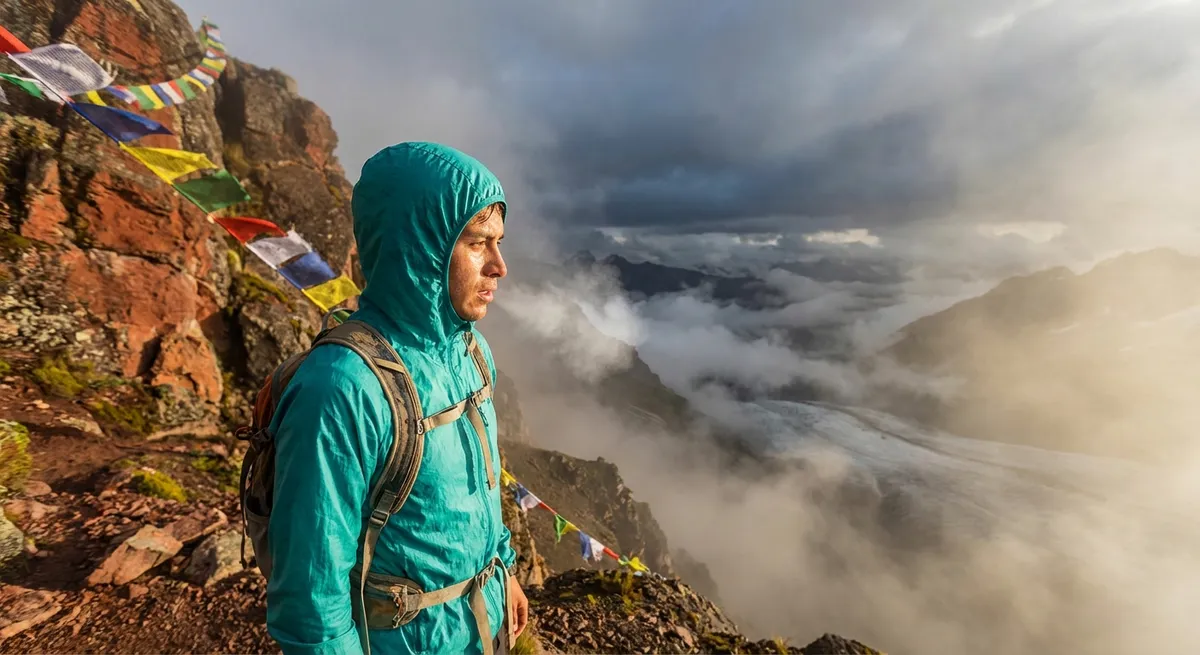
This guide is for the traveler who refuses to “take a break from training,” and instead turns every destination into a living, breathing gym. Let’s turn your next journey into a full-body expedition.
What Adventure Fitness Really Means
Adventure fitness is the art of blending physical training with exploration, using landscapes, cultures, and unexpected terrain as your workout partners. It’s less about rigid plans and more about deliberate movement in wild, unfamiliar spaces.
Instead of treadmill miles, you’re chasing altitude in the Andes. Instead of a bench press, you’re hauling a pack up a ridgeline in New Zealand. And instead of isolating muscle groups under fluorescent lights, you’re moving your entire body under changing skies, unstable surfaces, and real-world challenges that demand strength, balance, and grit.
At its core, adventure fitness is:
- Functional – You run, climb, swim, and carry in ways that directly support how you move through the world.
- Adaptive – Weather, terrain, and local constraints constantly force you to adjust and improvise.
- Experiential – The “PR” isn’t just your pace—it’s the story you bring home.
- Mental as much as physical – Navigating new trails or waters builds resilience, problem-solving, and a powerful sense of self-trust.
You’re not escaping life by traveling and training; you’re stepping fully into it.
Destination Highlights for the Adventure-Driven Athlete
Every corner of the globe offers a different way to test your limits. These destinations aren’t just beautiful—they’re purpose-built by nature to make you move.
1. Madeira, Portugal – The Island of Staircases and Sky
Volcanic cliffs, knife-edge ridgelines, and ancient irrigation paths (levadas) carve through lush mountains. Here, trail running becomes a vertical sport. You’ll power-hike endless stone steps, dart through laurel forests, and crest ridges where clouds sit below your feet. It’s a dreamland for runners, hikers, and anyone who wants their quads to remember a trip forever.
2. Patagonia, Chile & Argentina – Wind-Chiseled Endurance
Patagonia’s jagged peaks and glacier-fed lakes make even a simple day hike feel like an expedition. Strong winds turn every step into resistance training. Multi-day treks like the W in Torres del Paine demand leg strength, core stability, and mental stamina—especially when you’re shouldering a pack through unpredictable weather.
3. Kyoto & Surrounding Mountains, Japan – Temples, Trails, and Quiet Grit
Kyoto’s temple-studded hills offer natural stair workouts as you climb to shrines and viewpoints. Venture into the nearby mountains (like Kurama or Hiei) and you’ll weave through cedar forests and mossy paths that challenge balance, coordination, and patience. It’s movement wrapped in ritual and reflection.
4. Queenstown, New Zealand – Adrenaline as Cross-Training
Queenstown lives for adventure: mountain biking, trail running, canyoning, bouldering, and lake paddling are everywhere. One day you’re grinding up a switchbacking trail, the next you’re kayaking into a headwind or scrambling over lakeside rocks. It’s an open-world fitness game—only the soreness is real.
5. Lofoten Islands, Norway – Arctic Edges and Ocean Air
Sharp peaks explode straight out of icy water. Here, you can hike ridge routes that reward steady footwork and leg strength, then cool down with a cold-water plunge that doubles as recovery and mental training. Narrow, rocky trails force you to stay present—every step is a decision.
The through-line in all these places? You don’t need a gym card. You need curiosity, preparation, and a willingness to sweat where the views are too good to ignore.
Five Active Travel Tips for the Serious Fitness Adventurer
You’re not a casual stroller—you’re the type who checks elevation gain before booking a stay. These five tips will help you stay strong, safe, and ready to say yes to every physical challenge your destination throws at you.
1. Build a “Micro-Gym” in Your Pack
Your luggage is prime real estate, but you don’t need much to train hard anywhere.
Pack just enough to create a portable training toolkit:
- Light resistance band – For rows, pulls, and glute activation before big hikes or runs.
- Mini-loop band – Perfect for hip, glute, and shoulder stability work in tight spaces.
- Jump rope – If weather or safety keeps you indoors, you still have a high-intensity cardio option.
- Lacrosse or massage ball – Small, dense, and invaluable for self-massage after long days on your feet.
With this setup, you can hit strength, mobility, and recovery in a hostel courtyard, an airport corner, or the roof of a guesthouse at sunrise.
2. Program Your Training Around the Terrain
Instead of forcing your usual gym split into a totally new environment, let the landscape design the week.
For example:
- Mountain destinations (Patagonia, Swiss Alps): Use hikes and scrambles as your “leg days.” Add short hill sprints, pack carries, or stair intervals on non-trek days. Focus your structured strength work on upper body and core with bands and bodyweight.
- Coastal and island spots (Madeira, Hawaii, Greek islands): Turn shoreline runs, sand sprints, and open-water or pool swims into your cardio backbone. Mix in rock-hopping, snorkeling, or SUP sessions as low-impact conditioning.
- Urban adventures (Lisbon, Istanbul, Mexico City): Treat the city as a vertical gym. Staircases, steep streets, and long walking routes double as endurance work. Sprinkle in short playground strength circuits—pull-ups on bars, step-ups on benches, lunges along quiet paths.
The goal: pair your structured training with what the destination does best, instead of fighting it.
3. Make Recovery as Intentional as the Adventure
Adventure fitness is often more taxing than a controlled gym session. Different beds, time zones, new foods, long transit, and big elevation swings all add invisible stress.
Anchor yourself with recovery rituals:
- Non-negotiable sleep window – Choose a range (e.g., 7–9 hours) and protect it like a reservation. Loud hostels? Pack earplugs and an eye mask.
- Five-minute mobility rule – After any big hike, climb, or run, spend five minutes on hips, ankles, and upper back. Consistency beats complexity.
- Hydration as a habit, not a fix – Carry a bottle, add electrolytes in hot or high-altitude climates, and drink regularly instead of “catching up” at night.
- Intentional rest days – Use them to explore markets, museums, or quiet neighborhoods on foot at an easy pace. You’re moving, but you’re not hammering your system.
Recovery doesn’t mean you stop adventuring—it means you choose gentler forms of it so you can keep going tomorrow.
4. Let Local Culture Shape Your Movement
Adventure fitness isn’t only about terrain; it’s about how people move in each place.
Look for ways to train with the culture:
- Join a local run club, sunrise hiking group, or outdoor boot camp. You’ll discover safe routes and training spots you’d never find on your own.
- Try local movement traditions: capoeira in Brazil, martial arts in Thailand or Japan, tango in Argentina, traditional dance classes in West Africa or Polynesia. You’re cross-training and connecting at the same time.
- Use infrastructure locals rely on: city bikes for low-intensity rides, public stairways for conditioning, outdoor calisthenics parks for full-body workouts.
You’re not just passing through—you’re learning the way bodies move in this part of the world, and adding that to your own athletic vocabulary.
5. Train for Uncertainty, Not Perfection
Adventure travel is inherently unpredictable. Trails close. Ferries cancel. Weather shifts. Your best training tool is adaptability.
Build a mindset and system designed for chaos:
- Create “plug-and-play” workouts – Have a 15-, 20-, and 30-minute bodyweight session saved on your phone: push-ups, squats, lunges, planks, burpees, band rows. If a day’s plans blow up, you can still get meaningful movement in.
- Embrace variable intensity – Some days will be massive—8-hour trek, big climb, long paddle. Others will be light. Trust that the big efforts “count” more than a missed gym day.
- Track effort, not just metrics – In new places, GPS and pace become unreliable. Use perceived exertion: Was it easy, moderate, hard, or brutal? That’s enough data to manage fatigue.
- Stay safety-first – Remote trails, fast-changing weather, and unfamiliar roads demand humility. If conditions feel wrong, shifting to a safer workout isn’t “quitting”—it’s experienced decision-making.
Adventure fitness rewards those who can roll with whatever the map, sky, and road serve up—and still find a way to move with intention.
Conclusion
Adventure fitness is what happens when you stop separating “training” from “travel” and start seeing the world as a living obstacle course, stretching from ridgeline to shoreline to city stairwell. Your strength stops belonging to a single gym and starts belonging to every trailhead, harbor, and backstreet you set foot in.
Pack light, move boldly, and let each new horizon ask: How will you use your body here? The answer is your next story—and your next evolution.
Sources
- U.S. Department of Health & Human Services – Physical Activity Guidelines - Evidence-based recommendations on activity levels, intensity, and health benefits relevant to planning active travel
- American Council on Exercise (ACE) – Benefits of Outdoor Exercise - Overview of how training outside impacts mental health, motivation, and performance
- Harvard T.H. Chan School of Public Health – Exercise and Health - Research-backed information on exercise, cardiovascular health, and longevity
- Centers for Disease Control and Prevention – Travel Health - Guidance on staying healthy and managing risk during international travel, including active trips
- International Journal of Environmental Research and Public Health – Outdoor Physical Activity and Well-Being - Research article examining links between outdoor activity, mental health, and overall well-being